If you have a mature tree in your Beeston garden — especially in the older Victorian and Edwardian streets around High Road, Chilwell, Attenborough, or Toton — you are probably already aware that managing it is not as simple as calling any local gardener. Trees of this age and scale require a qualified tree surgeon in Beeston who understands the specific planning environment, ecological sensitivities, and structural demands that come with the NG9 area. This guide covers everything homeowners in Beeston need to know about tree surgery, tree removal, TPOs, and finding the right arborist locally.
Tree Surgery Services in Beeston, NG9
TB Tree Care provides a full range of professional tree surgery services across Beeston and the wider NG9 postcode, including Chilwell, Attenborough, Toton, and Stapleford. Our core services include:
- Crown reduction — reducing the overall height and spread of a tree back to suitable secondary branches, maintaining its natural form in compliance with BS 3998:2010
- Crown lifting — removing the lower branches to increase headroom beneath the canopy, improving access and light
- Crown thinning — removing selected internal branches to improve light penetration and airflow without reducing the tree’s overall size
- Tree felling and dismantling — safe removal of trees, including technical section-by-section dismantling where space is restricted
- Stump grinding — grinding stumps below ground level to allow re-planting or surface reinstatement
- Deadwood removal — removing dead and dying branches above 50mm diameter that present a risk to people or property below
- Emergency tree work — rapid response to storm-damaged or failed trees across NG9
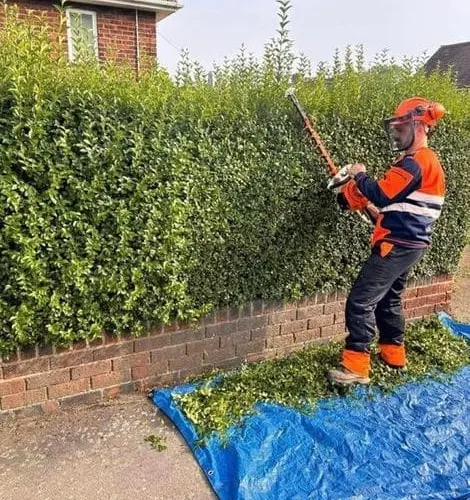
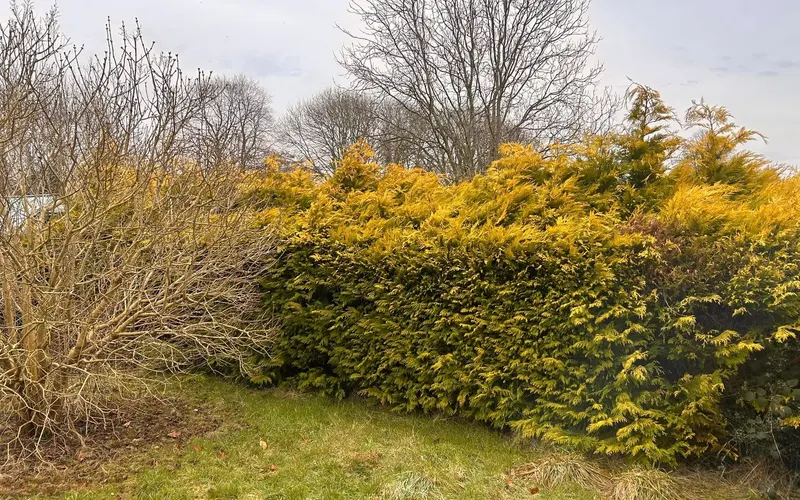
- Hedge cutting and trimming — including overgrown Leylandii, formal hedges, and mixed boundary planting
- Tree surveys and condition reports — written professional assessments suitable for insurance, conveyancing, or planning submissions
- TPO consent applications — preparing and submitting Tree Preservation Order applications to Broxtowe Borough Council on your behalf
Why Beeston’s Victorian and Edwardian Gardens Create Tree Problems
Beeston expanded rapidly between 1880 and 1930, and the houses built in that period — particularly the terraced rows off High Road and Queens Road, and the larger semis towards Chilwell Road and Meadow Lane — were typically built with generous gardens. The trees planted in those gardens during that era are now between 80 and 130 years old. Many are significant specimens: horse chestnut, common lime, copper beech, and English oak that would have been modest young trees when the properties were first occupied are now reaching canopy widths of 15 metres or more and heights that tower over two-storey houses.
The fundamental tension is between the scale of the tree and the scale of the plot. Victorian terraced gardens were not designed to permanently accommodate a mature English oak. As these trees have grown, they have gradually encroached on buildings, driveways, neighbours’ plots, and overhead utilities in ways that were never anticipated.
The Most Common Tree Problems We See in Beeston
Root Heave and Driveway Damage
Mature lime and horse chestnut trees are among the most aggressive surface rooters in the urban tree population. We regularly see driveways in Beeston that have been lifted by up to 150mm by root systems extending well beyond the canopy edge. In severe cases, root systems are also exerting pressure on shallow Victorian foundations — particularly in older terraced properties where the original footings extend only 600–900mm below ground level. Root investigations and management options (including root barrier installation and non-destructive root pruning) are part of our service.
Overhanging Canopy and Neighbour Disputes
Under English law, you are entitled to cut back branches that overhang your property to the boundary line, but you are not permitted to enter your neighbour’s land without consent, and the cut material remains the property of the tree’s owner. What is less widely understood is that removing large sections of overhanging canopy from one side only can create a structural imbalance in the tree that increases its failure risk. We regularly assist Beeston homeowners in navigating these situations — advising on both the legal position and the arboriculturally sound approach to any crown works.
Deadwood and Storm Risk
Mature trees in Beeston’s older streets have typically received little formal management over the decades. Without routine deadwood removal, the accumulation of dead branches in the upper canopy becomes a genuine hazard, particularly during the storm season between October and March. A dead branch of 100mm diameter falling from 12 metres carries enough energy to cause life-changing injury or write off a vehicle. Scheduled deadwood removal is one of the most cost-effective risk management operations available to homeowners.
Co-dominant Stems and Structural Failure
Many of Beeston’s older trees were allowed to develop with two or more main stems of similar diameter growing from the same base. These co-dominant unions — where bark becomes trapped between the stems as they grow together — are inherently weak and prone to catastrophic splitting. We check for included bark and co-dominant stems during every inspection and can advise on the options, from early structural pruning through to cabling and bracing where the tree is worth retaining.
Ecological Considerations: Attenborough Nature Reserve
The southern part of Beeston borders the Attenborough Nature Reserve and Gravel Pits SSSI — one of the most important wildlife sites in the East Midlands. The corridor between the railway line and the River Trent supports significant bat populations, including common pipistrelle, soprano pipistrelle, and Daubenton’s bat, all of which are European Protected Species under the Conservation of Habitats and Species Regulations 2017.
For any tree felling or significant crown reduction on mature trees near this corridor, we carry out a preliminary roost potential assessment before work commences. Where roosting features (cavities, bark pockets, ivy, crevices) are present, a licensed bat survey may be required before the work can lawfully proceed. We work with licensed bat ecologists and can coordinate this process on your behalf.
The active nesting season runs from March to August. We follow the Wildlife and Countryside Act 1981 requirement to check for active nests before any significant crown works during this period, and will not commence work that would disturb active nests.
Broxtowe Borough Council TPOs and Conservation Areas
Broxtowe Borough Council is the local planning authority for Beeston, Chilwell, Attenborough, Toton, and Stapleford. The council maintains a public register of Tree Preservation Orders (TPOs) covering individual trees, groups, and areas of woodland across the borough. A TPO makes it a criminal offence to cut, top, lop, uproot, or carry out any works to a protected tree without prior written consent — carrying an unlimited fine on summary conviction.
Before any work is scoped or quoted, we check the Broxtowe TPO register and advise you clearly on whether consent is required. Where an application is needed, we prepare and submit it on your behalf — including any arboricultural report or risk assessment the council requires. The standard determination period is eight weeks, though many straightforward applications are resolved more quickly.
Conservation Areas in Beeston
Parts of central Beeston and some of the older residential streets fall within the Beeston Conservation Area. Within a designated conservation area, six weeks’ prior notification is required for any significant work to a tree with a stem diameter exceeding 75mm at 1.5m height — even without a TPO. This Section 211 notification gives the council the opportunity to make a TPO if they consider the tree worth protecting. Failing to give notice is a criminal offence in the same way as breaching a TPO. We handle all notification paperwork as standard.
Qualifications, Insurance, and Standards
When choosing a tree surgeon in Beeston, qualifications and insurance are not optional extras — they are the baseline. We hold current NPTC (National Proficiency Tests Council) qualifications covering:
- Chainsaw maintenance and cross-cutting (CS30/31)
- Felling and processing trees up to 380mm (CS32)
- Aerial tree work using a rope and harness (CS38/39)
- Safe use and operation of wood chippers
- Aerial rescue procedures
All tree surgery work we carry out follows BS 3998:2010 Recommendations for Tree Work — the British Standard that specifies how pruning objectives should be defined, how cuts should be made, and what constitutes acceptable tree surgery practice. We carry full public liability insurance and can provide copies of our insurance certificate and RAMS (Risk Assessment and Method Statement) before any work begins.
Frequently Asked Questions — Tree Surgery in Beeston
Do I need planning permission to cut a tree in Beeston?
It depends on whether your tree is protected. If it is subject to a Tree Preservation Order, you need written consent from Broxtowe Borough Council before carrying out any works. If it is in a conservation area and has a stem diameter over 75mm at 1.5m height, you need to give six weeks’ notice. If neither applies, no formal consent is required for routine maintenance. We check both registers as part of every site visit.
How much does tree surgery cost in Beeston?
Cost depends entirely on the species, size, condition, accessibility, and the type of work required. A straightforward crown lift on a medium-sized tree in an accessible garden will be considerably less than a technical dismantlement of a large oak in a confined space. We provide free, no-obligation quotes after a site visit so you have a clear, itemised figure before committing to anything.
Can you remove a tree that is subject to a TPO?
Yes, with prior consent from Broxtowe Borough Council. Consent is routinely granted where there is a genuine arboricultural reason — serious disease, structural failure risk, or damage to property. The process involves submitting an application with supporting evidence, which we can prepare on your behalf. The council then has eight weeks to determine it.
How quickly can you respond to emergency tree work in NG9?
We prioritise emergency callouts across NG9 and typically respond within 24 hours for situations involving immediate risk. For life-threatening emergencies — a tree across a public road or direct threat to a building — contact the council emergency line or police as a first step to cordon the area.
Do you cover Chilwell, Attenborough, and Toton as well as Beeston?
Yes. We cover the full NG9 postcode area, including Beeston, Chilwell, Attenborough, Toton, and Stapleford. We also cover Carlton, Gedling, and many other Nottinghamshire locations. See our full coverage area for details.
Ready to book a tree surgeon in Beeston? Free site visits, no-obligation quotes, NPTC qualified, fully insured. Familiar with Broxtowe Borough Council TPO requirements and the ecological sensitivities of the Attenborough corridor.