Most tree problems do not arrive without warning. They develop gradually, season by season, and the window for straightforward, cost-effective management is usually much longer than most homeowners realise — right up until the moment it closes suddenly in a storm or during an unexpected inspection. Understanding what to look for and what to do across the calendar year is the most practical step any homeowner in the East Midlands can take towards keeping their garden trees safe, healthy, and legally compliant.
This guide covers a complete seasonal tree care cycle for Nottinghamshire and Derbyshire gardens, including the specific issues most common in each season, the legal context for planning ahead, and the work that is best done at each time of year.
Spring (March to May): Diagnosis and Caution
Spring is the most diagnostically revealing time of year for any garden tree. The leaf flush is the tree’s annual statement of health, and watching it carefully gives you information that is not available at any other time.
What to Look For as Trees Come Into Leaf
- Sections that fail to leaf out — branches or sections of crown that remain bare while the rest of the tree leafs normally indicate deadwood, significant dieback, or disease. This is the most visible spring signal that something needs attention.
- Smaller than normal leaves — generalised miniaturisation of foliage across the whole crown often signals root stress — waterlogging over winter, compaction, or root damage from nearby building works.
- Ash tip dieback — the characteristic symptom of Chalara ash dieback is most visible in May and June, when new shoot tips wilt, blacken, and die before fully expanding. See our detailed ash dieback guide if you have an ash tree showing these symptoms.
- Cherry blossom weight — Prunus species come under significant structural stress at full blossom as the crown becomes suddenly heavy. Spring is when co-dominant union failures are most common in flowering cherries. If you have a mature Prunus with a V-shaped or poorly structured union, inspect it before blossom weight peaks.
Nesting Bird Season: The Legal Constraint
The active nesting season in the UK runs broadly from March to August. Under the Wildlife and Countryside Act 1981 (as amended), it is a criminal offence to intentionally take, damage, or destroy the nest of any wild bird while it is in use or being built. This applies regardless of whether the tree is protected by a TPO or not. Practical implications:
- Significant crown works (crown reduction, tree felling) should where possible be scheduled outside the nesting season — October to February is the optimal window
- A pre-work check for active nests is standard practice before any significant works during the season; we carry this out as part of our site preparation
- Minor maintenance (deadwood removal of isolated branches not adjacent to nest sites) can proceed during nesting season with appropriate checks
Summer (June to August): Monitoring Season
Summer is when most homeowners feel their trees are doing fine — a full canopy of leaves gives the impression of health and vigour. In practice, summer is when several important issues are actively developing that will only become visible later.
Drought Stress
The summer drought events that are now a near-annual occurrence across much of England — and which are increasing in frequency and severity in the East Midlands — create specific pressures for garden trees. Signs of drought stress include:
- Premature leaf drop (leaves yellowing and falling in July or August rather than October)
- Leaf scorch — browning at the margins of leaves, progressing inward in severe cases
- Wilting of shoot tips in the hottest part of the day
- Cracking of clay soils around the base of trees (an indirect indicator)
Young trees in their first five years after planting are most vulnerable to drought stress and may need supplementary watering during prolonged dry periods. Established mature trees on deep soils are generally more resilient, but trees on clay soils that has dried to significant depth can show root distress that affects the following year’s growth.
Fungal Bracket Season
Many of the fungal pathogens that cause serious structural decay in amenity trees produce their fruiting bodies in late summer and autumn. August, September, and October are the best months to check around the bases, root flares, and lower stems of mature trees for any fungal growth. If you see anything that looks like a bracket, shelf, or cluster of mushrooms growing from a tree, treat it as a warning sign and arrange a professional inspection. See our detailed guide to tree warning signs.
Horse Chestnut Leaf Miner
The distinctive brown mining trails of horse chestnut leaf miner (Cameraria ohridella) become visible on horse chestnuts from July onwards. Heavy infestation causes premature leaf drop by August in severely affected trees. While leaf miner is rarely fatal in isolation, it weakens trees already under other stresses. The most effective management is collecting and removing fallen leaves in autumn to reduce overwintering pupae. See also our guide to horse chestnut disease in Nottinghamshire.
Autumn (September to November): The Best Season for Most Tree Work
For most deciduous trees in the East Midlands, late autumn is the optimal time for significant pruning and structural work. The reasons are well-established in arboricultural practice:
- Structural visibility — after leaf fall, the full branch architecture is visible and any structural defects, deadwood, or crown imbalances that were hidden in summer are now clearly apparent
- Dormancy reduces stress — pruning during dormancy means the tree is not investing resources in active growth when the wound is made; the wound response begins in spring when growth resumes
- Disease risk is lower — many fungal pathogens spread via spores that are active in spring and early summer; late autumn wounds are less exposed to airborne infection during the period of highest spore load
- Ground conditions — October and November typically offer firm enough ground conditions for equipment access before the wet of December and January
- Outside the nesting season — works can proceed without the bird-nesting constraints that apply from March
Fruit Tree Pruning in Autumn
Apple and pear trees are traditionally pruned between November and February in the UK — after full leaf fall and before bud break. Winter pruning of fruit trees reduces disease entry risk (canker infection through fresh wounds is lower in winter), allows the best assessment of the branch framework, and produces the most vigorous growth response in spring. Pruning after bud break or in summer is possible but suboptimal for most circumstances.
Winter (December to February): Inspection and Storm Preparation
A fully leafless tree in winter is structurally transparent in a way it never is during the growing season. Every aspect of the branch architecture, every union, every crack or wound, every area of deadwood is clearly visible without the visual noise of foliage. Winter is therefore the ideal time for a professional tree inspection.
It is also the most important time to act on any outstanding tree work before the storm season peaks. The highest-wind months in the East Midlands are typically November through March, with the most severe events historically concentrated in December, January, and February. A tree with significant accumulated deadwood, an untreated co-dominant union, or a developing lean that has not been assessed entering this period is carrying an unnecessarily elevated risk.
Conifers and Evergreens: Year-Round but Seasonal Timing
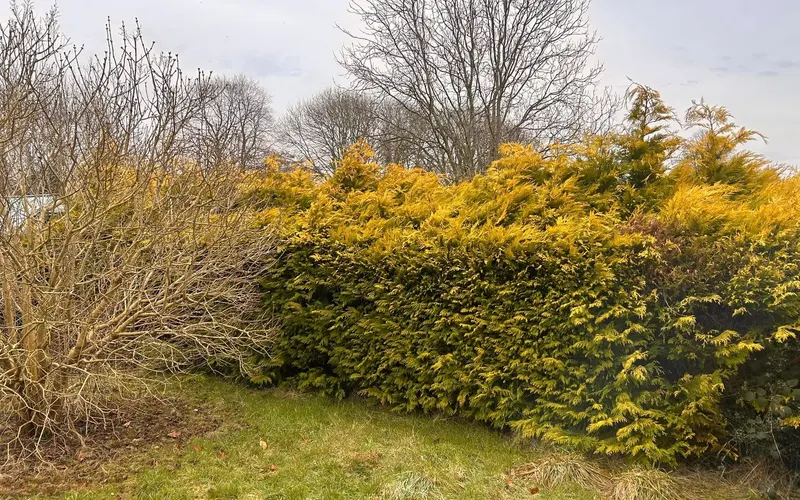
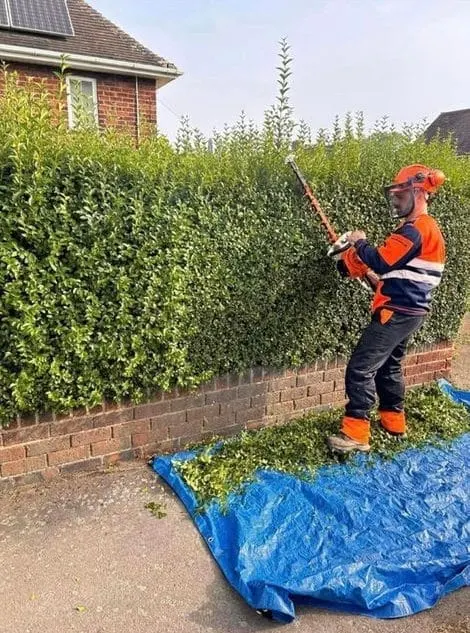
Conifers and broadleaved evergreens do not go dormant in the same way as deciduous trees. Formal conifers and hedges (Leylandii, Thuja, Taxus) are generally best cut in late summer — August to early September — when growth has slowed for the season but there is still enough growing weather to allow some recovery of cut surfaces before winter. A second lighter cut in early spring is appropriate for hedges being maintained at a set height. Avoid hard cutting into brown wood on Leylandii at any time of year.
Year-Round: Planning Ahead for TPO Applications
One seasonal consideration that many homeowners miss is that TPO consent applications — and conservation area Section 211 notifications — take time to process. If you have a tree that you expect will need significant work, do not wait until the problem is urgent before applying. Eight weeks is the standard determination period, and it is not reduced by the urgency of the situation (emergency consent is available only in genuine life-safety scenarios). Factor in the lead time when planning tree work on protected trees, particularly if you want the work done in the optimal autumn window.
See our full guide to Tree Preservation Orders and our location guides for Beeston, Carlton, Belper, and the other areas we cover.
Frequently Asked Questions
When is the best time to cut trees in England?
For most deciduous trees, late autumn and winter (October to February) is optimal for significant pruning — outside the nesting season, during dormancy, and with full structural visibility after leaf fall. Fruit trees are specifically pruned November to February. Conifers are best cut in late summer (August to September).
Can I cut a tree in summer?
Yes, but with caveats. Significant crown works during the nesting season (March to August) require a pre-work check for active nests. Summer pruning can also increase disease risk for susceptible species. For most routine work, autumn and winter are preferable but not always necessary.
When should I book a tree surgeon for winter work?
September and October are the best months to book — ahead of the autumn rush, when the ground is still firm and the window before winter storm season gives time to act on anything identified. We are often booked several weeks ahead from November onwards.
Do bats affect when I can have tree work done?
Bat roost surveys, where required, take time to organise and are seasonal — emergence surveys can only be carried out during the active bat season (April to October). If your tree has roost potential (cavities, loose bark, ivy, old wounds) and requires significant works, factor this into your planning timeline well in advance.
Seasonal tree management across Nottinghamshire and Derbyshire. Inspections, pruning, deadwood removal, and emergency work year-round. NPTC qualified, fully insured. Free site visits and no-obligation quotes.