Tree Removal in Nottinghamshire & Derbyshire — Felling & Dismantling
At TB Tree Care, our qualified arborists bring years of hands-on experience to safe, controlled tree removal across Derbyshire and Nottinghamshire. We specialise in removing unsafe, storm-damaged and unsuitable trees using industry-recognised methods, professional-grade equipment and strict BS3998 standards.
- Rated ★★★★★ by Happy Customers
- Fully insured & certified
- Friendly and professional team
Based in Shirebrook · covering Nottinghamshire & Derbyshire
Request a FREE Quote
If you’re unsure about the condition of a tree, we’re here to help. Send a message or call 07949 268926 if you’d prefer to speak to someone directly.
Amazing work done by Tom and his team came out last minute to do a job for us and we are so grateful would highly recommend him to anyone!
Helen Hinchliff
Oct 2025
Great job done by Tom and his team! 100% recommend. Five star all round 😃
Kate Finn
Aug 2025
Brilliant job from Tom and the team - friendly, reliable and well priced. All mess was cleared away and Tom made sure we were 100% happy with the job, chopping more off the tree as we asked. 5 star service and highly recommend A*
Natalie Rumsey
Jun 2025
A fantastic job done removing my three conifer trees. On time well actually early! Very professional, polite and friendly. They left everything tidy and took all the rubbish with them. Would definitely recommend Tom and his team. ⭐️⭐️⭐️⭐️⭐️
Mandy Moore
Jun 2025
Tom was really professional very good job done of my conifers would definitely recommend *****
Carol Dockwray
May 2025
Excellent work. Did exactly what we wanted. Extremely friendly and good advice. Definitely recommend.
Jane Fretwell
May 2025
Had to get rid of a tree before viewings on our house. Tom was professional and efficient. Got the job done quickly for a good price. Left everything clear and tidy. Thanks Tom
Siobhan Meades
May 2025
had Tom and his crew in today to rip out an unsightly overgrown hawthorn hedge and grind the stumps, splendid job and the garden left clean and tidy, can highly recommend their services
Brian Reuben James
Apr 2025
A truly professional service, fantastic knowledge and offers no obligation advice if you’re not sure what you need. Came and took an exceptionally large Laurel tree down for me, fully cleared and tidied, left my garden with so much more light (and sunshine when we get it) would definitely recommend.
Diane Hayden
Feb 2025
TB Tree care, Initial opinion completely professional. Polite at all times. When asked to do more work we agreed then and there and was very happy to go ahead. Never felt pressured or anything. I would recommend Tom for this service. five stars ⭐️⭐️⭐️⭐️⭐️
Scraton Alexzander
Feb 2025
Tree removal qualifications, insurance & safety standards
Tree removal work must be completed by trained, insured professionals. TB Tree Care is fully qualified and committed to completing all tree felling and removal safely and efficiently.
Professional Credentials
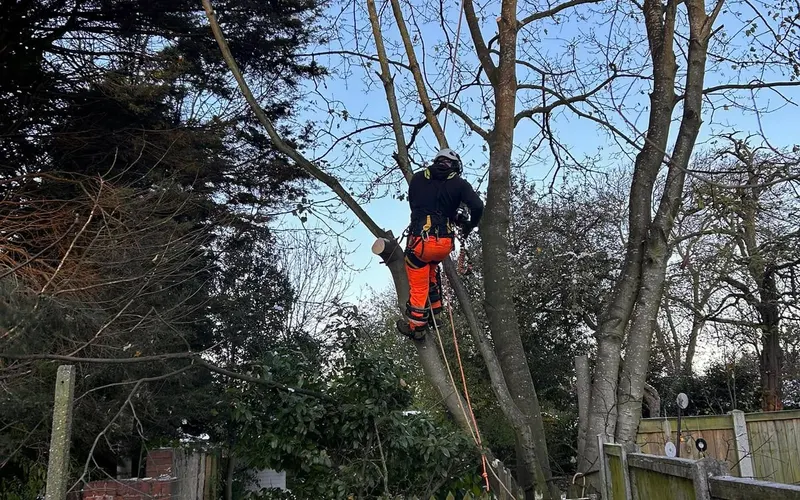
- NPTC-certified in cross-cutting and chainsaw operation
- Qualified in felling small to medium trees (up to 380mm)
- Certified in aerial rescue operations
- Qualified in chainsaw-to-rope access techniques
- Trained in rigging and dismantling operations
- Experienced in handling trees protected by conservation area rules and Tree Preservation Orders
Safety & Compliance
- Full public liability & employer’s liability insurance
- Comprehensive on-site risk assessments
- Method statements available on request
- Strict adherence to wildlife, nesting and environmental legislation
- Compliance with all recognised tree work standards and safe felling practices
How Our Tree Removal Process Works
We follow a structured removal process to ensure safe, efficient and controlled management when cutting down trees. Every step is planned to minimise risk and ensure the complete removal of the tree.
- Initial Assessment: Inspection of tree health, decay, species, size and structural behaviour.
- Risk Analysis: Identifying hazards, including power lines, access limitations and environmental risks.
- Method Selection: Choosing between controlled tree felling or sectional dismantling depending on the size of the tree and constraints.
- Safe Tree Removal: The tree is carefully dismantled or felled using professional tree removal techniques and equipment.
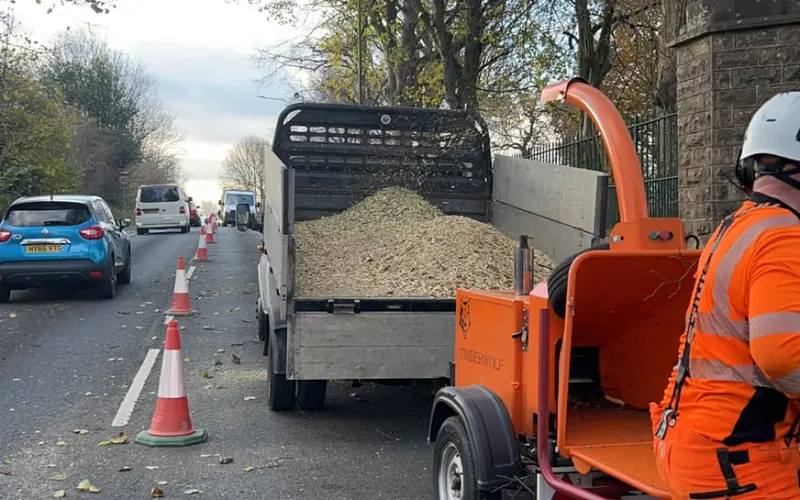
- Waste Handling: Timber and branches are processed, moved, chipped or removed as required.
- Final Clean-Up: All removal work is completed and the ground left safe and tidy.
Qualified tree professionals completing the work safely and efficiently
Clear communication before and during the job
Use of specialist equipment for controlled tree felling
Full insurance cover for all tree removal operations
A respectful and tidy service from start to finish
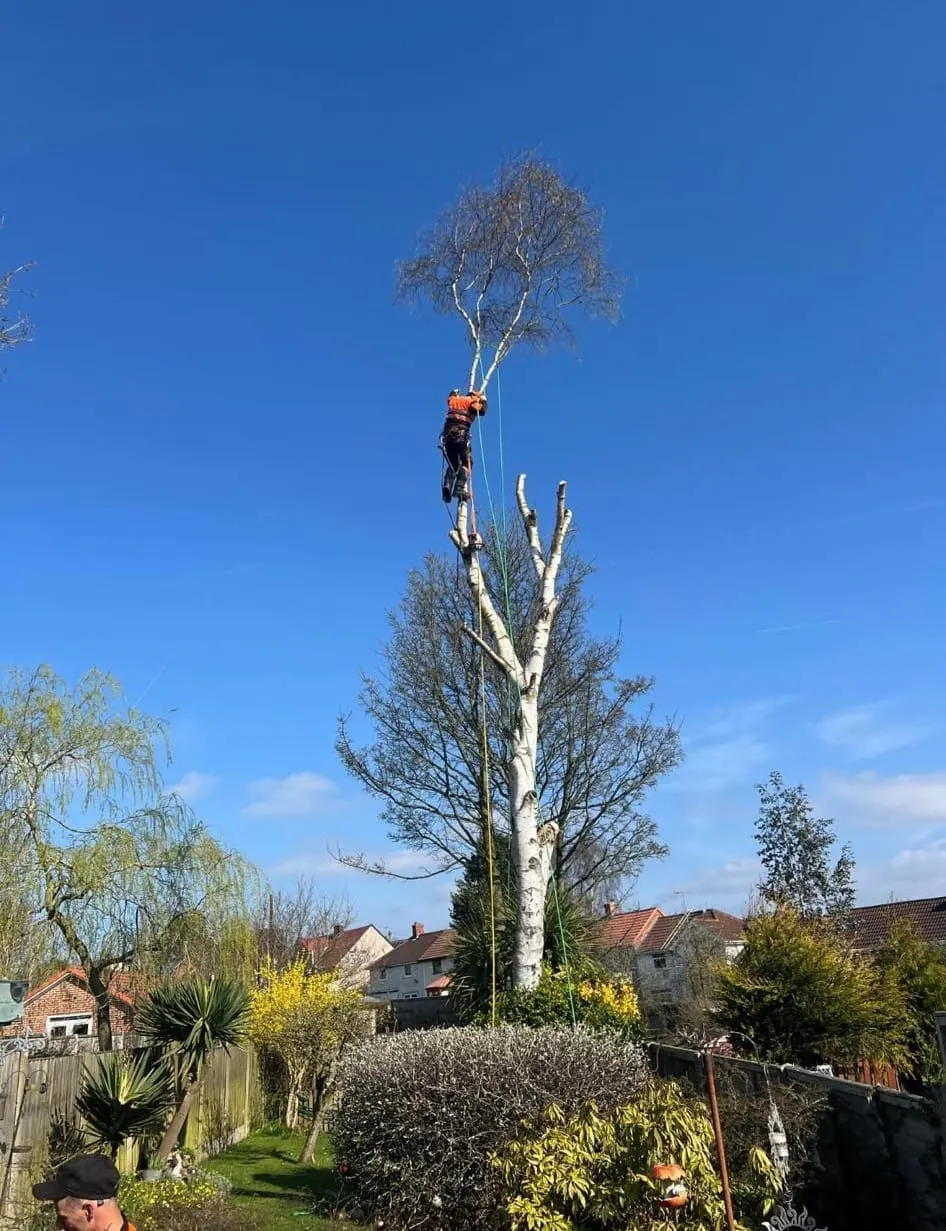
Why Tree Removal Is Needed
Tree removal becomes necessary when a tree poses a risk or can no longer be retained safely. Homeowners often contact us for:
Safety hazards
Instability, decay, deadwood or root failure
Storm damage
Splits, cracks, broken limbs or leaning trees
Disease or decline
Fungal rot, pests or structural weakness
Structural conflicts
Trees too close to buildings, boundaries or underground services
Light obstruction
Removing trees that block sunlight
Development work
Preparing sites for landscaping or construction
Regulatory compliance
Trees in conservation areas or under a Tree Preservation Order may require permission
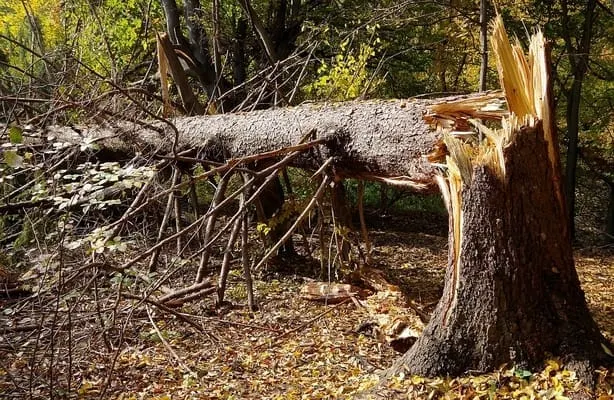
Understanding Tree Structure & Stability
Safe tree removal depends on understanding how a tree behaves during cutting. We assess multiple structural factors before any removal work begins:
Tension and compression wood
How timber reacts when cut
Natural lean
Influences the safe direction when cutting down a tree
Crown balance
Uneven weight may affect movement
Root stability
Decay or uplift affects safety
Species of tree
Each reacts differently to cuts
Tree health
Diseased or dead trees require different techniques
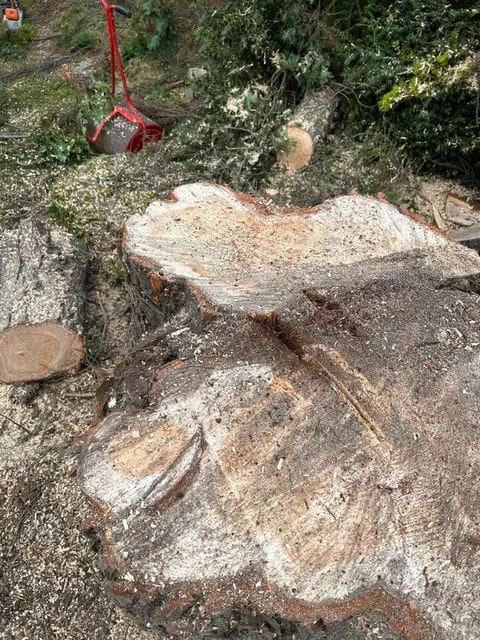
When to Fell vs. When to Dismantle
We assess each site to determine whether a tree can be safely felled in one piece or dismantled in sections. Our team selects each technique based on timber condition, tension forces, surroundings and the required removal process — recognised tree cutting systems chosen for the size, condition and restrictions of the tree in front of us.
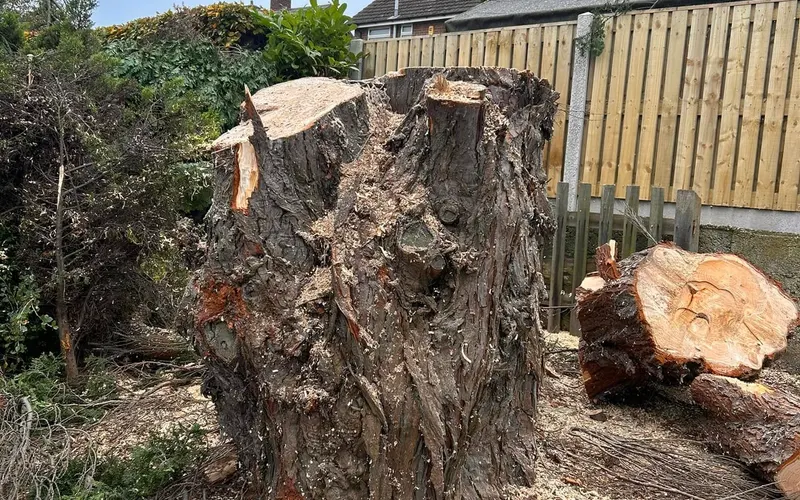
Straight Felling Is Used When:
- There is open space
- The fall line is predictable
- The tree has been felled safely before (repeat removals on woodland sites)
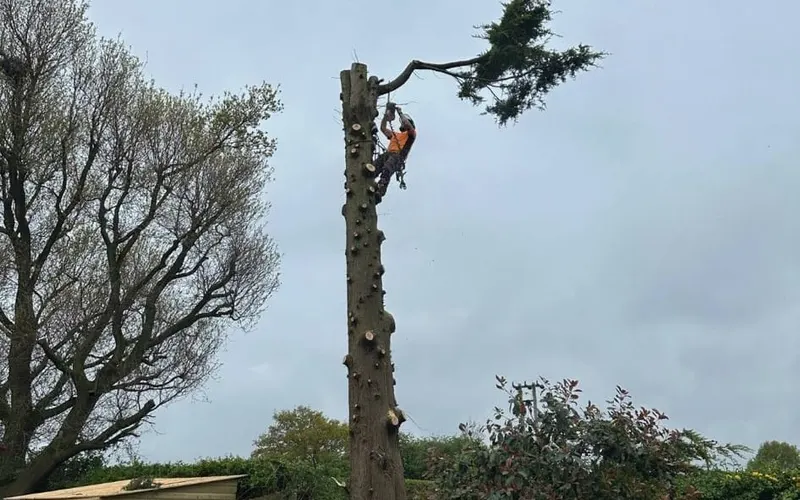
Sectional Dismantling Is Required When:
- Space is limited
- Buildings, gardens or utilities are close by
- The tree is unstable or diseased
- Specialist tree equipment such as MEWPs or cranes is required
Hazard assessment before every tree removal
Before cutting down the tree, we complete a full hazard assessment.
Site Hazards
- Planning drop zones and escape routes
- Checking for overhead obstacles such as power lines
- Locating underground services
- Assessing hung or suspended limbs
- Evaluating weather conditions for safe tree removal
Environmental Checks
- Wildlife and nesting checks
- Habitat inspections
- Weather suitability checks
- Minimising disturbance to nearby plants and structures
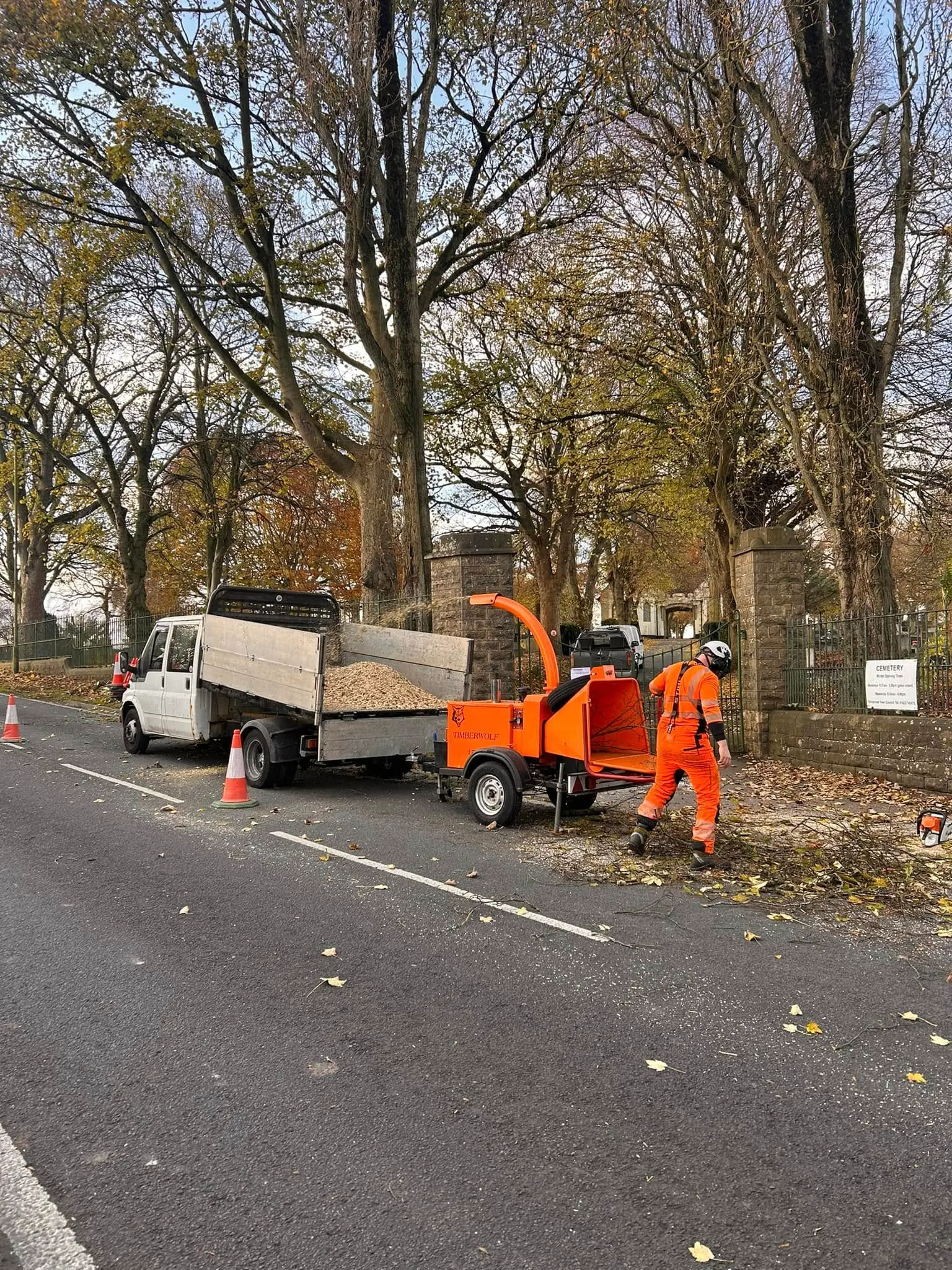
Specialist tree removal & dismantling equipment
Professional chainsaws
Rigging and lowering systems
Specialist tree cutting and dismantling equipment
MEWPs for challenging access
Cranes for complex removals
Grinding equipment and stump removal tools
Tree removal across Nottinghamshire and Derbyshire
Tree Removal — FAQs
Do I need permission to remove a tree?
Sometimes, and it is a criminal offence to get it wrong. Permission is required if the tree carries a Tree Preservation Order, and six weeks notice must be served on the council if it stands in a conservation area. Unauthorised work on a protected tree carries an unlimited fine, and the liability sits with the property owner rather than the contractor. We search the correct council register against your address before quoting, at no charge, and make the application where one is needed.
Which council do I apply to?
It depends on the address rather than the postal town, and the two often disagree. A Chesterfield postal address may fall under Chesterfield Borough or North East Derbyshire District. Hucknall is Ashfield, not Gedling. Nottingham addresses split between the City, Rushcliffe, Gedling and Broxtowe. A notice served on the wrong authority is not a valid notice, so we confirm which one covers you before anything is submitted.
How much does tree removal cost?
It is priced per job, and the biggest factor is rarely the tree itself. Height and diameter matter, but access matters more: a tree that can be felled into open ground is a fraction of the cost of the same tree dismantled in sections over a conservatory. Species, decay, rigging requirements, proximity to buildings and the volume of waste all feed in. Quotes are free and always written, and our tree surgery prices page explains what moves the number.
What is the difference between felling and dismantling?
Felling means cutting the tree so it falls in one piece in a controlled direction, which needs a clear drop zone roughly as long as the tree is tall. Dismantling means taking it down in sections, lowering each piece on ropes, and is what most urban removals require. Dismantling is slower and costs more, but on a terraced plot or anywhere near a building it is the only safe method.
How long does a tree removal take?
Most domestic removals are done within a day. A straightforward fell in an open garden can take a couple of hours; a large sectional dismantle with restricted access and a long carry for the arisings can run to two days. We give you a realistic duration in the written quote rather than a best case, and if we think it will need two visits we say so before you book.
Can you remove a tree in a tight or awkward spot?
Yes — it is most of what we do. Sectional dismantling with rigging allows removal within a few feet of a building, over a conservatory, or between a house and a boundary wall. The common Nottinghamshire cases are Victorian back gardens reachable only through the house and terraces with no rear vehicle access. Send a photograph of the access route with your enquiry and we can usually tell you the method and the price before visiting.
What happens to the timber and branches?
Everything is cleared as standard unless you want to keep some of it. Brushwood is chipped and taken away, and larger timber is cross-cut into manageable lengths. Plenty of customers keep the cordwood for a log burner, in which case we cut it to your preferred length and stack it wherever you want it, which also reduces the amount we have to haul away.
Is stump grinding included in the price?
No, it is quoted separately, because plenty of people are happy to leave a stump and there is no sense charging everyone for it. If you want the ground clear for turfing, planting or a fence, say so at quoting and we will price grinding alongside the removal — doing both on the same visit is cheaper than bringing a machine back. See stump grinding for what that involves.
What should I do if a tree suddenly becomes dangerous?
Ring us on 07949 268926 rather than using the form, at any hour. Keep people and vehicles away from the area underneath and from the fall zone in the direction it is leaning. Sudden lean, a cracking sound, soil lifting or splitting around the base, or a limb hanging in the crown all mean the tree has already failed structurally and may come down without further warning. Do not try to prop it or cut anything yourself.
Can you work in bad weather?
Climbing work stops in high wind, and that is not negotiable — a climber in a moving crown cannot control a cut. Heavy rain and ice make ropes, timber and ground conditions unpredictable. We will postpone rather than take the risk, and we will tell you as early as we can. Emergency make-safe work is the exception: if something has already failed we will attend and stabilise it in conditions we would not choose for planned work.
How do you keep the job safe?
A written risk assessment and method statement before we start, an agreed drop zone and escape routes, exclusion of everyone not working on the job, and rigging rated well above the loads involved. Our climbers are NPTC-certified including aerial rescue, which means a second climber can get an injured colleague down rather than waiting for a ladder. We carry £5 million public liability and full employer's liability cover.
Will removing the tree change my garden?
Yes, and it is worth thinking about before you commit. Light levels change immediately, which affects whatever was growing in the shade. Soil moisture changes too: a mature tree moves a great deal of water, and on the shrinkable clay around Chesterfield and parts of Nottingham removing one can cause ground heave over following seasons. Neighbouring trees that grew up sheltered by it become newly wind-exposed. We will raise any of this that applies to your plot.
What is hinge wood?
The hinge is a band of uncut timber deliberately left between the felling cut and the directional notch, and it is what steers the tree as it goes over. Too thick and the tree will not fall; too thin and it tears off and the tree goes wherever it wants. Getting hinge thickness and taper right for the species and lean is the single most important control in directional felling, and it is a large part of what NPTC felling certification actually tests.
Have a question about any part of the removal process?
If you have any questions about safe tree removal or would like guidance on whether a tree needs to be removed, feel free to get in touch using the button below.
For urgent concerns, you can call us on 07949 268926.