
Hedge Trimming & Cutting Across Nottinghamshire and Derbyshire
Maintenance cutting, hard reductions, renovation of hedges left too long, complete removal, and traditional laying on rural boundaries. Domestic gardens, commercial grounds, schools, care homes, housing associations and farms.
Hedges are where most garden contractors do the most damage, because the mistakes are invisible for a season and then permanent. Cut a conifer back into brown wood and it will never regrow. Take a mature beech too hard in one go and you lose the face of it for years. We cut to an agreed height and width written down before we start, and we tell you honestly what a neglected hedge will and will not recover from.
- Leylandii, beech, hornbeam, privet, laurel, yew and native hedgerows
- Nesting bird checks on all work between March and August
- Powered access platforms for tall boundary hedges
- All trimmings chipped and cleared — nothing left behind
- NPTC-certified, insured to £5 million
- One-off cuts, annual contracts, or full removal
Based in Shirebrook · covering Nottinghamshire & Derbyshire
Request a FREE Hedge Quote
Tell us the rough length and height of the hedge, roughly when it was last cut, and your postcode. Most hedges can be priced the same working day, often without a site visit.
What our customers say
Amazing work done by Tom and his team came out last minute to do a job for us and we are so grateful would highly recommend him to anyone!
Helen Hinchliff
Oct 2025
Great job done by Tom and his team! 100% recommend. Five star all round 😃
Kate Finn
Aug 2025
Brilliant job from Tom and the team - friendly, reliable and well priced. All mess was cleared away and Tom made sure we were 100% happy with the job, chopping more off the tree as we asked. 5 star service and highly recommend A*
Natalie Rumsey
Jun 2025
A fantastic job done removing my three conifer trees. On time well actually early! Very professional, polite and friendly. They left everything tidy and took all the rubbish with them. Would definitely recommend Tom and his team. ⭐️⭐️⭐️⭐️⭐️
Mandy Moore
Jun 2025
Tom was really professional very good job done of my conifers would definitely recommend *****
Carol Dockwray
May 2025
Excellent work. Did exactly what we wanted. Extremely friendly and good advice. Definitely recommend.
Jane Fretwell
May 2025
Had to get rid of a tree before viewings on our house. Tom was professional and efficient. Got the job done quickly for a good price. Left everything clear and tidy. Thanks Tom
Siobhan Meades
May 2025
had Tom and his crew in today to rip out an unsightly overgrown hawthorn hedge and grind the stumps, splendid job and the garden left clean and tidy, can highly recommend their services
Brian Reuben James
Apr 2025
A truly professional service, fantastic knowledge and offers no obligation advice if you’re not sure what you need. Came and took an exceptionally large Laurel tree down for me, fully cleared and tidied, left my garden with so much more light (and sunshine when we get it) would definitely recommend.
Diane Hayden
Feb 2025
TB Tree care, Initial opinion completely professional. Polite at all times. When asked to do more work we agreed then and there and was very happy to go ahead. Never felt pressured or anything. I would recommend Tom for this service. five stars ⭐️⭐️⭐️⭐️⭐️
Scraton Alexzander
Feb 2025
The one thing worth knowing before you book anyone
Whether a hedge can be cut back hard depends entirely on the species, and it is not a judgement call — it is botany.
Beech, hornbeam, privet, laurel, hawthorn, holly and yew carry dormant buds in old wood. Cut them back into bare stems and they will push new growth. A neglected hedge of any of these can be renovated, provided the work is staged over two or three seasons rather than done all at once.
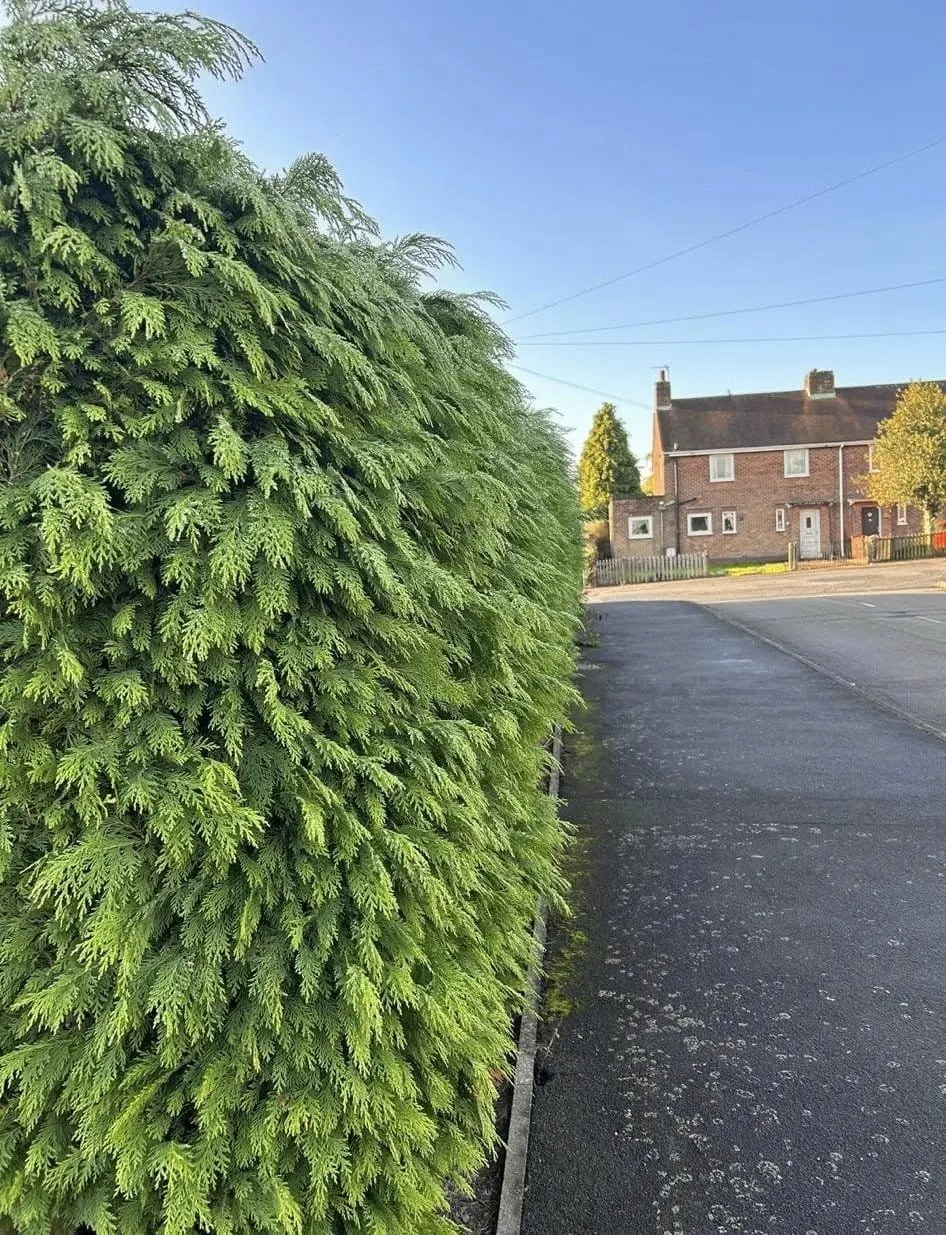
Leylandii, Lawson cypress, thuja and most other conifers do not. There are no dormant buds behind the green. If the foliage now starts at eight feet and you want the hedge at six, cutting it to six leaves a permanent brown screen — not a hedge that recovers slowly, but one that never recovers at all.
Yew is the exception that catches people out: it is a conifer, and it will regenerate from old wood. A shapeless old yew hedge can be cut back to the frame and will come again over a few seasons, which is why we will always argue for renovating one rather than replacing it.
Anyone who agrees to take your leylandii down to a height with no green on it either does not know this or is not telling you.
Maintenance Cutting
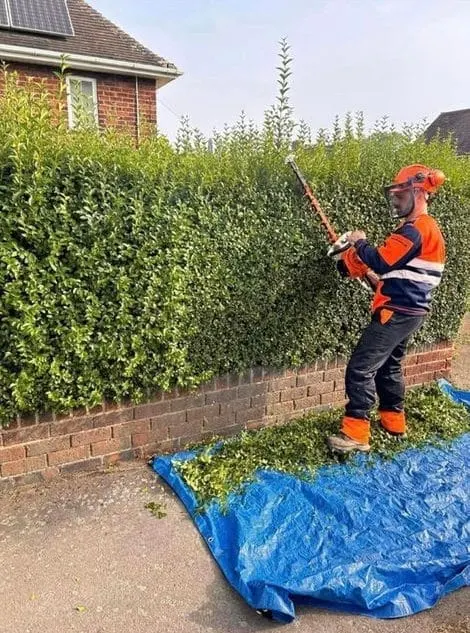
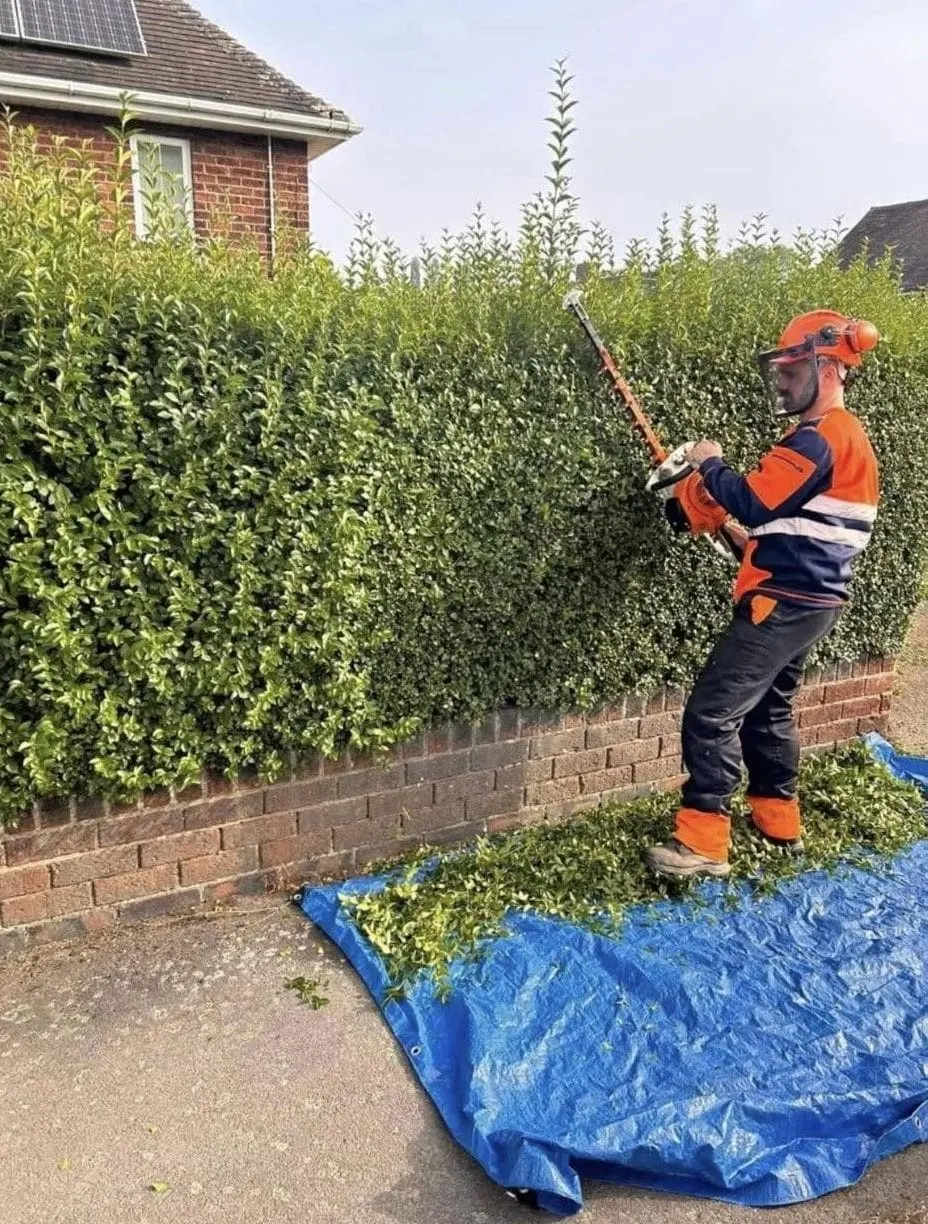
Routine cutting is the bulk of what we do — an agreed height and width, a clean defined line, and every trimming cleared before we leave.
How often depends on the species and, to a surprising degree, on the ground. Privet, box and yew hold their shape best on two cuts a year, usually late spring and late summer. Leylandii and Lawson cypress need at least one annual cut simply to stay inside green growth. Beech and hornbeam are generally fine on a single late-summer cut, which also keeps the brown winter leaf people plant them for. Native field hedgerows go on a longer rotation entirely.
Dimensions agreed and written down
We set the finished height and width with you before the first cut and record it, so later visits match rather than creeping upward year on year. Where a hedge runs across sloping ground we agree how the line steps down the slope, because a hedge cut parallel to a slope looks like it is sliding downhill.
Why we cut to a batter
A hedge cut slightly narrower at the top than the base lets light reach the bottom. Cut dead vertical, or wider at the top, and the base goes bare and leggy within a few years while the top thickens — which is how most of the hollow, gappy hedges we get called to renovate got that way.
Renovating a Neglected Hedge
Bringing a hedge back after years of neglect is a different job to trimming one, and it takes more than one visit to do properly.
On a species that regenerates, the work is staged: the top and one face in the first season, the second face two or three years later once the first has recovered and refoliated. It is slower, and it looks worse before it looks better. It is also the difference between recovering a hedge that took thirty years to grow and killing it in an afternoon.
Ground conditions matter more than people expect here. A hard-pruned hedge on free-draining sandstone around Mansfield is far more exposed to drought stress than the same hedge on the moisture-retentive Trent silt at Collingham. We time renovation cuts for autumn or early spring where we can, and we will say if the hedge needs watering through its first summer afterwards.
What we tell you before starting
How it will look at each stage, how many seasons it will take, and what the realistic outcome is. If we think a hedge is too far gone to recover we will say so and price removal and replanting instead, rather than taking the money for a reduction that kills it slowly.
Old fruiting boundaries
Around Southwell in particular, a lot of old garden boundaries are part hedge and part neglected fruit — apple, damson and plum grown into a line, a legacy of the Bramley orchards. Those want renovation pruning to an open framework across a couple of winters, not shearing to a flat face, which removes the fruiting wood entirely.
Hedge Removal & Stump Grinding
Sometimes the right answer is taking the hedge out. Leylandii screens planted across the East Midlands in the 1970s and 80s are the usual case: past maintainable height, taking the light out of the garden, and with no green growth low enough to reduce into.
We remove full runs, grind the stump line out below ground level, and clear the connecting surface roots between stumps. That last part matters more than it sounds — a removal that leaves a line of stumps and root plate makes it impossible to get a fence post in or dig a planting hole, which is normally the entire point of clearing the boundary. On the made ground and colliery spoil around Ripley, Somercotes and the eastern side of Chesterfield those roots run shallow and wide, so we allow for clearing a broader strip than the hedge line suggests.
What full removal includes
Cutting the run down in sections, chipping and removing all arisings, grinding the stump line out below ground level, and clearing the roots that run between stumps. If a fence is going in afterwards, tell us at quoting and we grind deeper and wider along the post positions so the posts actually go in.
Shared boundaries and the High Hedges rules
A hedge sitting on a shared boundary needs your neighbour on board before it comes out. Separately, an evergreen hedge over two metres can fall under the High Hedges provisions of the Anti-social Behaviour Act 2003, which is a matter for your district council. We can explain roughly where the line falls, but a genuine dispute is one for the council rather than for us.
Nesting Birds, TPOs and Conservation Areas
Three things can turn an ordinary hedge cut into a legal problem, and all three are checkable before anyone starts.
Nesting birds. It is an offence under the Wildlife and Countryside Act 1981 to damage or destroy an active nest. We inspect every hedge before cutting between March and August, and where we find an active nest we leave that section and return once the birds have fledged. We do not cut around a nest and hope.
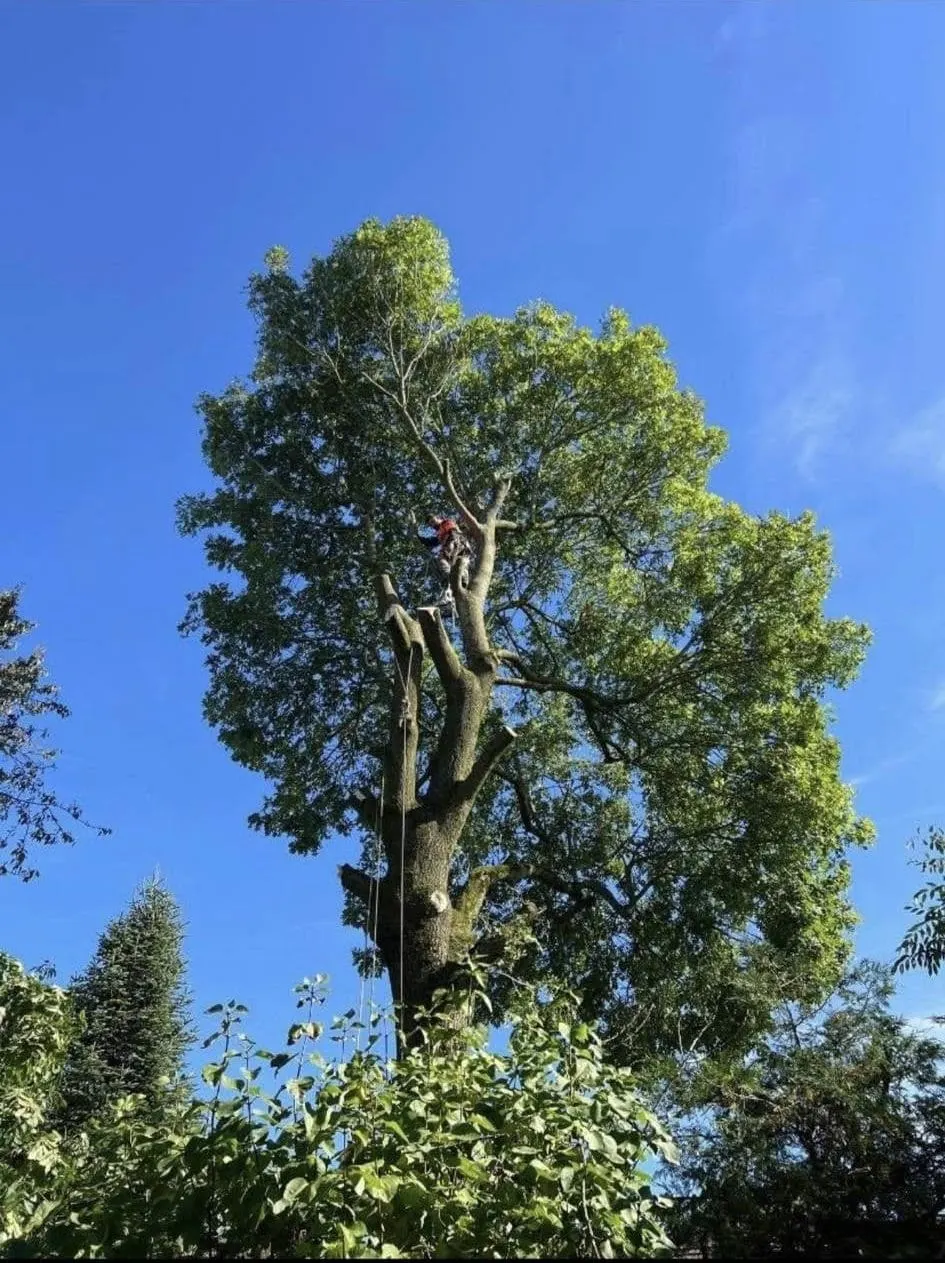
Protected trees. Cutting a hedge needs nobody's permission, but a tree growing within the hedge line may carry a Tree Preservation Order — and a great many boundary oaks, ash and limes across this area do. Working on a protected tree without consent is a criminal offence carrying an unlimited fine, and the fact that it stood inside a hedge you were entitled to cut is not a defence.
Conservation areas. Work on any tree inside a conservation area needs six weeks' notice to the council. Retford has three, Worksop four, and Southwell, Belper, Milford, Chesterfield and Ripley all have designated areas covering older parts of the town.
We check, before quoting, at no charge
The register search for the correct authority, conservation area status for the address, and a nesting inspection where the season calls for it. Where consent or a Section 211 notice is needed we make the application and wait for the determination rather than starting and hoping.
Getting the right council matters
A notice served on the wrong authority is not a valid notice. A Chesterfield postal address might be Chesterfield Borough or North East Derbyshire. Hucknall is Ashfield, not Gedling. Nottingham addresses split four ways. We confirm which one covers you before anything is priced.
What Hedge Cutting Costs
Hedge work is priced by the job rather than by the metre, because length on its own tells you very little. The variables that actually move a quote are height — specifically whether the hedge can be reached from the ground or needs a powered platform — depth, whether it needs cutting from both faces, whether it is a maintenance trim or a hard reduction into old wood, and how much green waste comes off. A run left five years generates a startling volume. Access is the other big one: a property with a driveway is straightforward, while a terrace with no rear access means every barrow-load comes back through the house and a morning job becomes most of a day. Our tree surgery prices page explains how we build a quote in more detail.
What pushes a quote up
Height past ladder reach, cutting required from both faces, hard reduction rather than a trim, conifer runs beyond about twenty metres, no vehicle access for removing arisings, stepped or carry-only gardens, and renovation staged across several seasons.
Where you can genuinely save
Cutting annually instead of every third year is the big one and usually pays for itself within two visits. Beyond that: fixing a height and width so the hedge stays maintainable, letting us leave chippings on site as mulch, and booking neighbouring properties on the same day so we set up once for the street.
Commercial, Grounds and Farm Contracts
We hold hedge maintenance contracts with schools, care homes, housing associations, retail parks, sports grounds, commercial landlords and farms across both counties. A commercial contract is typically two scheduled cuts a year timed around the nesting season, with a written record of each visit and priority attendance if something needs dealing with in between. On agricultural boundaries it is usually a rotational plan rather than an annual pass — cutting a proportion of the run each year keeps blossom and berry on the rest, which is better for the hedge and is what most environmental scheme agreements require. Fixed annual pricing, the same crew each time, RAMS issued before attendance, £5 million public liability and 30-day invoice terms.
Scheduled, recorded, invoiced once
Agreed dates, a written record of what was cut and when, and one annual invoice rather than a run of call-out charges. That record is what a managing agent, governing body or scheme inspection actually asks for when they want evidence the maintenance happened.
Working around a live site
Out-of-hours and weekend working where a school, care home or retail site cannot be disrupted, pedestrian management where the hedge fronts a footway, method statements and risk assessments issued in advance, and one point of contact for the term of the contract.
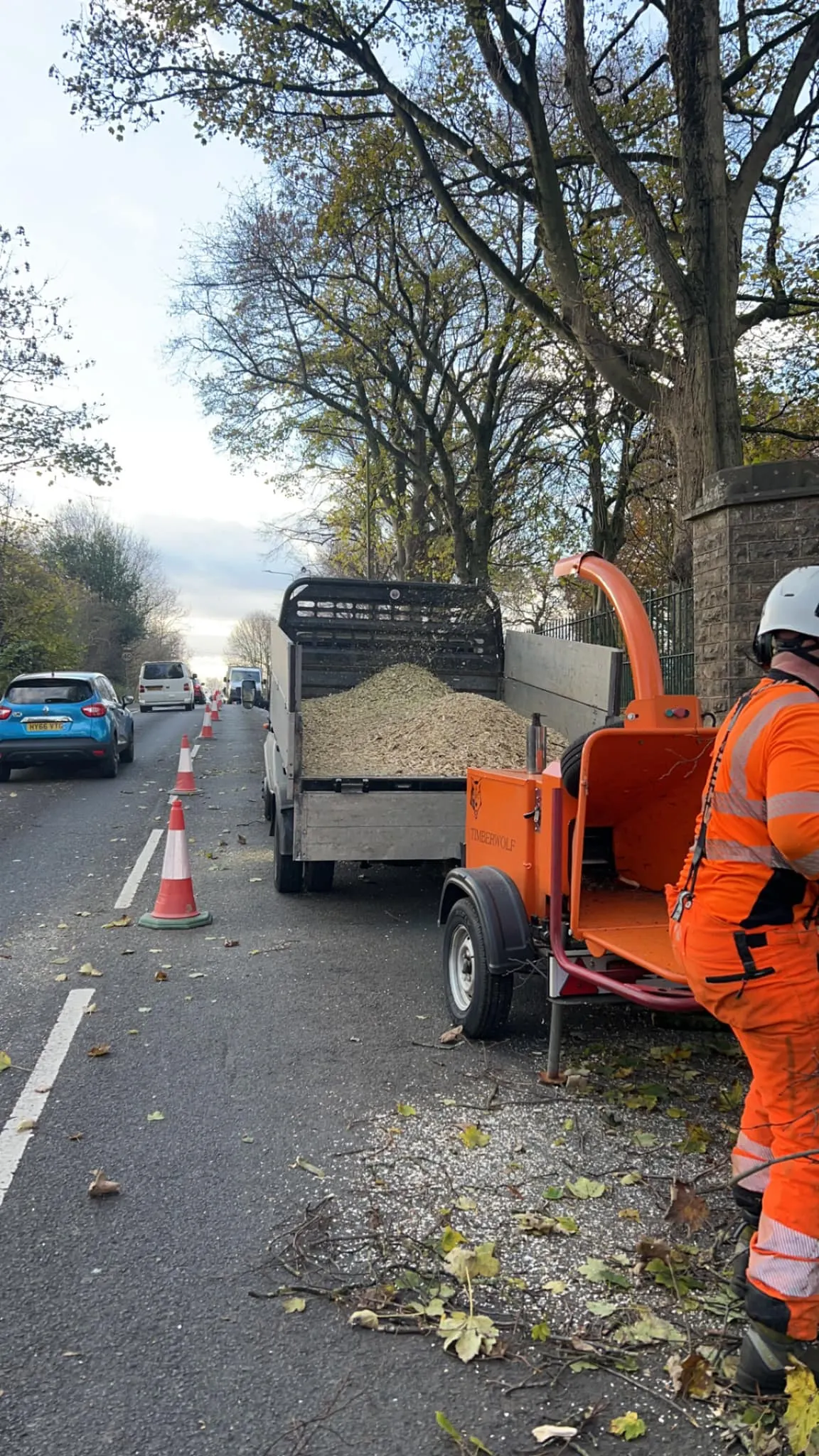
Hedge cutting across Nottinghamshire and Derbyshire
Hedge Trimming — FAQs
How much does hedge trimming cost?
Hedge work is priced by the job, based on height, depth, length, species, access, and whether it is a maintenance trim or a hard reduction. A routine annual cut reachable from the ground is the cheapest recurring work we do; a neglected conifer run needing a powered platform and staged renovation costs considerably more. Quotes are free and we can often price from photographs and rough measurements.
How often should hedges be trimmed?
It depends on the species rather than a standard interval. Privet, box and yew hold their shape best on two cuts a year, usually late spring and late summer. Leylandii and Lawson cypress need at least one annual cut to stay inside green growth. Beech and hornbeam are generally fine on a single late-summer cut, and native field hedgerows go on a longer rotation.
My leylandii is too tall — can it be cut down to size?
Only as far as the green growth extends. Conifers carry no dormant buds in brown wood, so cutting below the green line leaves a permanent brown screen rather than a hedge that regrows. Where that is the case we will say so before quoting and talk through removal and replanting instead of taking the job and leaving you with it.
Can an overgrown beech, privet or laurel hedge be saved?
Yes. Beech, hornbeam, privet, laurel, hawthorn, holly and yew all regenerate from old wood. The work is staged across two or three seasons — the top and one face first, the second face once the first has refoliated. Attempting the whole thing in one go leaves the hedge with no foliage to photosynthesise with and is a genuine risk to a mature hedge.
Can you cut hedges during the nesting season?
We can, but only after checking. It is an offence under the Wildlife and Countryside Act 1981 to damage or destroy an active nest, so between March and August we inspect the hedge before starting and leave any section holding an active nest until the birds have fledged. We will not cut around a nest and hope.
Do I need permission to cut my hedge?
Not for ordinary hedge cutting. Permission comes into it if a tree within the hedge line carries a Tree Preservation Order, or if the property sits inside a conservation area, which needs six weeks notice served on the correct council. We check both against your address before quoting, at no charge.
Will you take the trimmings away?
Always, and it is included in the quoted price. We sheet the borders before cutting so trimmings land on the sheet rather than in the planting, chip and remove all arisings, and sweep the paths and drive before leaving. If you would rather keep the chip as mulch we will stack it wherever suits you instead.
Can you reach a very tall hedge?
Yes. We use tracked access platforms for tall boundary hedges and long conifer runs, which is both safer and gives a straighter line than working off ladders. On tighter terraced plots we use compact equipment that passes through a standard 900mm gate without lifting fence panels.
Do you do traditional hedge laying?
Yes, on native field hedgerows of hawthorn, blackthorn, hazel and field maple, mainly around the rural parts of Bassetlaw, Newark and Amber Valley. It is dormant-season work between November and early March and produces a genuinely stock-proof boundary far denser at the base than any cut hedge. If the work sits under a farm environmental scheme we work to the specification and provide a written record.
Do you offer one-off cuts as well as contracts?
Both, with no obligation either way. A one-off cut is perfectly welcome. That said, an annual or twice-yearly arrangement works out cheaper per visit because the hedge never gets far enough out of hand to need the heavy reduction work that drives the price up.
Are you insured and qualified?
Yes. Our operatives are NPTC-certified, and we carry £5 million public liability insurance with full employer's liability cover. Certificates are available on request before work starts, and RAMS documentation is issued as standard for commercial, farm and contract work.
Get a free hedge quote
Call 07949 268926 or send the form with the rough length and height of the hedge. Most quotes come back the same working day, and there is no call-out charge anywhere we cover.