
Hedge Trimming in Bassetlaw — Garden Hedges and Field Boundaries
Hedge work across the district — Worksop, Retford, Blyth, Tuxford, Carlton in Lindrick, Harworth, Misterton and the villages between. Garden hedge cutting and reduction, renovation of hedges left too long, complete removal, and traditional laying on the agricultural boundaries that make up most of Bassetlaw.
This is the most rural district we work in, and the split shows in the work. Town gardens in Worksop and Retford want a clipped privet, beech or conifer boundary. Ten minutes out, the hedge is a mile of hawthorn and blackthorn holding stock in a field, and it wants an entirely different approach.
- Rated ★★★★★ by Bassetlaw customers
- NPTC-certified and insured to £5 million
- Free written quotes, no call-out charge
- Traditional laying on native field boundaries
- Nesting and hedgerow regulation checks
- All arisings chipped and cleared
Based in Shirebrook · covering Nottinghamshire & Derbyshire
Request a FREE Hedge Quote
Send the rough length and height, or the run in metres if it is a field boundary, and roughly when it was last cut. Most Bassetlaw hedges can be priced the same working day.
Amazing work done by Tom and his team came out last minute to do a job for us and we are so grateful would highly recommend him to anyone!
Helen Hinchliff
Oct 2025
Great job done by Tom and his team! 100% recommend. Five star all round 😃
Kate Finn
Aug 2025
Brilliant job from Tom and the team - friendly, reliable and well priced. All mess was cleared away and Tom made sure we were 100% happy with the job, chopping more off the tree as we asked. 5 star service and highly recommend A*
Natalie Rumsey
Jun 2025
A fantastic job done removing my three conifer trees. On time well actually early! Very professional, polite and friendly. They left everything tidy and took all the rubbish with them. Would definitely recommend Tom and his team. ⭐️⭐️⭐️⭐️⭐️
Mandy Moore
Jun 2025
Tom was really professional very good job done of my conifers would definitely recommend *****
Carol Dockwray
May 2025
Excellent work. Did exactly what we wanted. Extremely friendly and good advice. Definitely recommend.
Jane Fretwell
May 2025
Had to get rid of a tree before viewings on our house. Tom was professional and efficient. Got the job done quickly for a good price. Left everything clear and tidy. Thanks Tom
Siobhan Meades
May 2025
had Tom and his crew in today to rip out an unsightly overgrown hawthorn hedge and grind the stumps, splendid job and the garden left clean and tidy, can highly recommend their services
Brian Reuben James
Apr 2025
A truly professional service, fantastic knowledge and offers no obligation advice if you’re not sure what you need. Came and took an exceptionally large Laurel tree down for me, fully cleared and tidied, left my garden with so much more light (and sunshine when we get it) would definitely recommend.
Diane Hayden
Feb 2025
TB Tree care, Initial opinion completely professional. Polite at all times. When asked to do more work we agreed then and there and was very happy to go ahead. Never felt pressured or anything. I would recommend Tom for this service. five stars ⭐️⭐️⭐️⭐️⭐️
Scraton Alexzander
Feb 2025
The Dukeries legacy in ordinary Bassetlaw gardens
Bassetlaw carries the edge of the Dukeries — Clumber, Welbeck, Thoresby and Rufford — and the estate planting spilled out well beyond the park walls. It is why suburban gardens around Worksop, Carlton in Lindrick and Blyth turn up yew, holly and beech hedging of a quality you would not expect on a post-war plot, sometimes with a cedar or a Wellingtonia standing in the line that was clearly planted when the estate was still setting the tone locally.
That matters practically. A mature yew hedge is worth renovating rather than replacing, because it will take a hard cut back to the frame and come again — the one conifer that will. And a specimen tree standing in an old estate hedge line is exactly the sort of thing that carries a Tree Preservation Order, so we check the Bassetlaw register before quoting rather than after.
Retford adds another layer: three conservation areas, including the 2022 extension, covering much of the Georgian town centre and West Retford. Inside those, work on trees within a hedge line needs six weeks’ notice to the council.
Garden hedges and farm hedgerows are different jobs
A clipped garden boundary is cut for appearance and kept to a fixed height and width. A native field hedgerow is managed as stock-proof structure on a multi-year rotation, and cutting it annually to the same line is what makes it go hollow and gappy at the base. We quote and work the two differently rather than running a flail along everything.
Hedgerow Regulations on countryside boundaries
Removing a countryside hedgerow that is over 30 years old and meets the criteria requires notice to Bassetlaw District Council under the Hedgerows Regulations 1997, and removing an important hedgerow without consent is an offence. That applies to field boundaries rather than garden hedges. If the work is a removal on agricultural land we will tell you where you stand before it starts.
Nesting birds — checked, not assumed
Damaging or destroying an active nest is an offence under the Wildlife and Countryside Act 1981, and on a long native hedgerow the odds of finding one between March and August are high. We inspect before cutting and leave any section with an active nest until the birds have fledged.
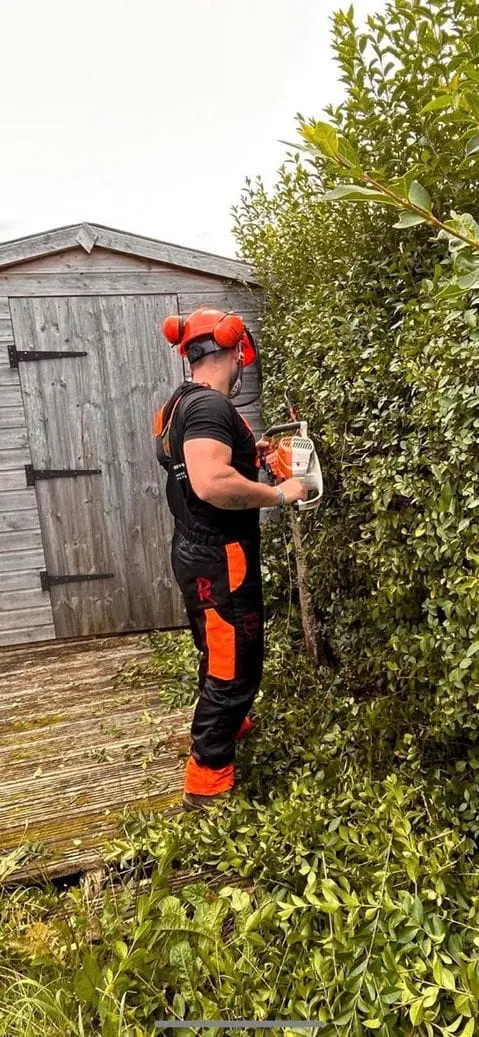
Free hedge quote across Bassetlaw
Garden hedge or field boundary, we quote both — and they are priced on completely different bases. Call 07949 268926 and say which you have got, and roughly how much of it.
Garden Hedge Cutting in Worksop & Retford
Routine cutting on domestic boundaries — an agreed height and width, a clean defined line, and every trimming cleared before we leave.
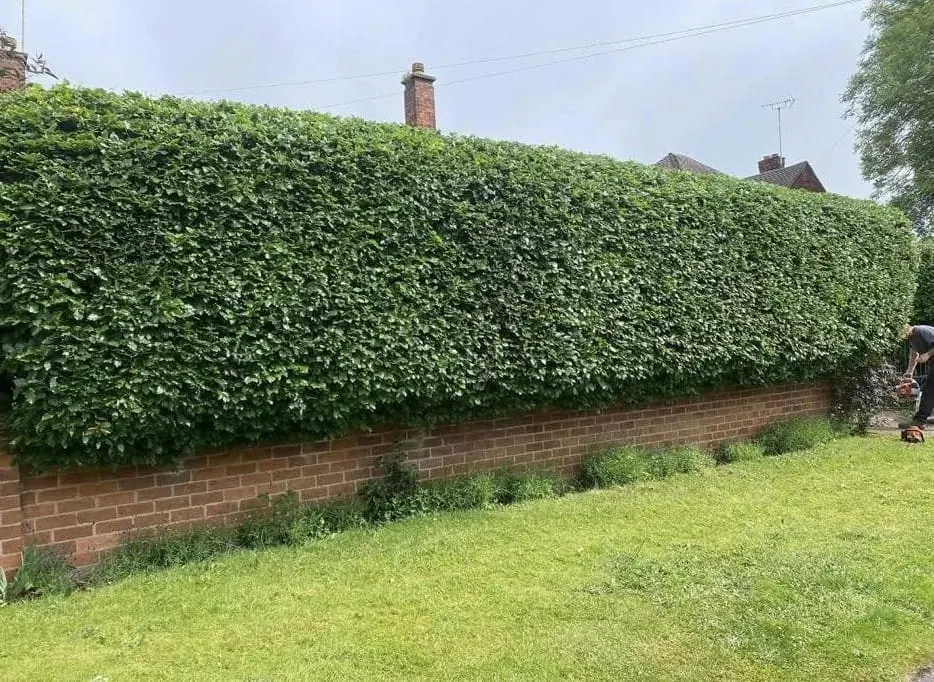
The two towns differ. Worksop runs to post-war estate planting around Manton, Kilton and Gateford, mostly privet, leylandii and laurel, with the estate-legacy yew and beech turning up on the older streets nearer the priory. Retford is a Georgian market town with deeper, longer plots — beech, hornbeam and yew, often behind railings, and often inside one of the three conservation areas where the frontage genuinely matters.
Cutting frequency by species
Privet, box and yew hold their shape best on two cuts a year, late spring and late summer. Leylandii and Lawson cypress need at least one annual cut to stay inside green growth. Beech and hornbeam are usually fine on a single late-summer cut, which also keeps the brown winter leaf that people plant them for.
Dimensions agreed before the first cut
We set the finished height and width with you and record it, so later visits match rather than creeping upward year on year. A slight batter — narrower at the top than the base — keeps light on the bottom of the hedge and stops it going bare underneath.
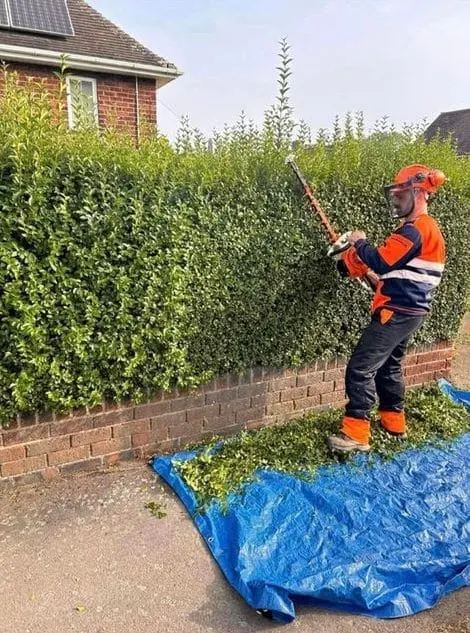
Hedge Laying on Field Boundaries
Traditional laying is the old method of rebuilding a native hedge — part-cutting the stems near the base, bending them over at an angle and weaving them between stakes so they keep growing horizontally. It produces a boundary that is genuinely stock-proof, far denser at the base than any cut hedge, and much longer-lived.
We lay mixed hawthorn, blackthorn, hazel and field maple boundaries across the arable and grazing land around Blyth, Tuxford, Sturton le Steeple, Misterton and the Idle and Ryton valleys. The work is dormant-season only, roughly November to early March — well clear of the nesting season, and it gives the hedge a full growing year to establish the new growth from the laid stems.
When laying beats another year of flailing
A hedge flailed to the same height for fifteen years goes hollow at the base, gaps open at ground level and it stops being a barrier. Laying rebuilds it from the bottom instead of trimming the top of a failing structure. It is a substantial job once rather than an ineffective one every year.
Environmental scheme specifications
Hedge laying, coppicing and gapping-up often sit inside farm environmental agreements, which carry requirements on stake spacing, cut angle, species mix and timing. Tell us at quoting if the work is going in under a scheme and we will work to the specification and provide a written record for your file.
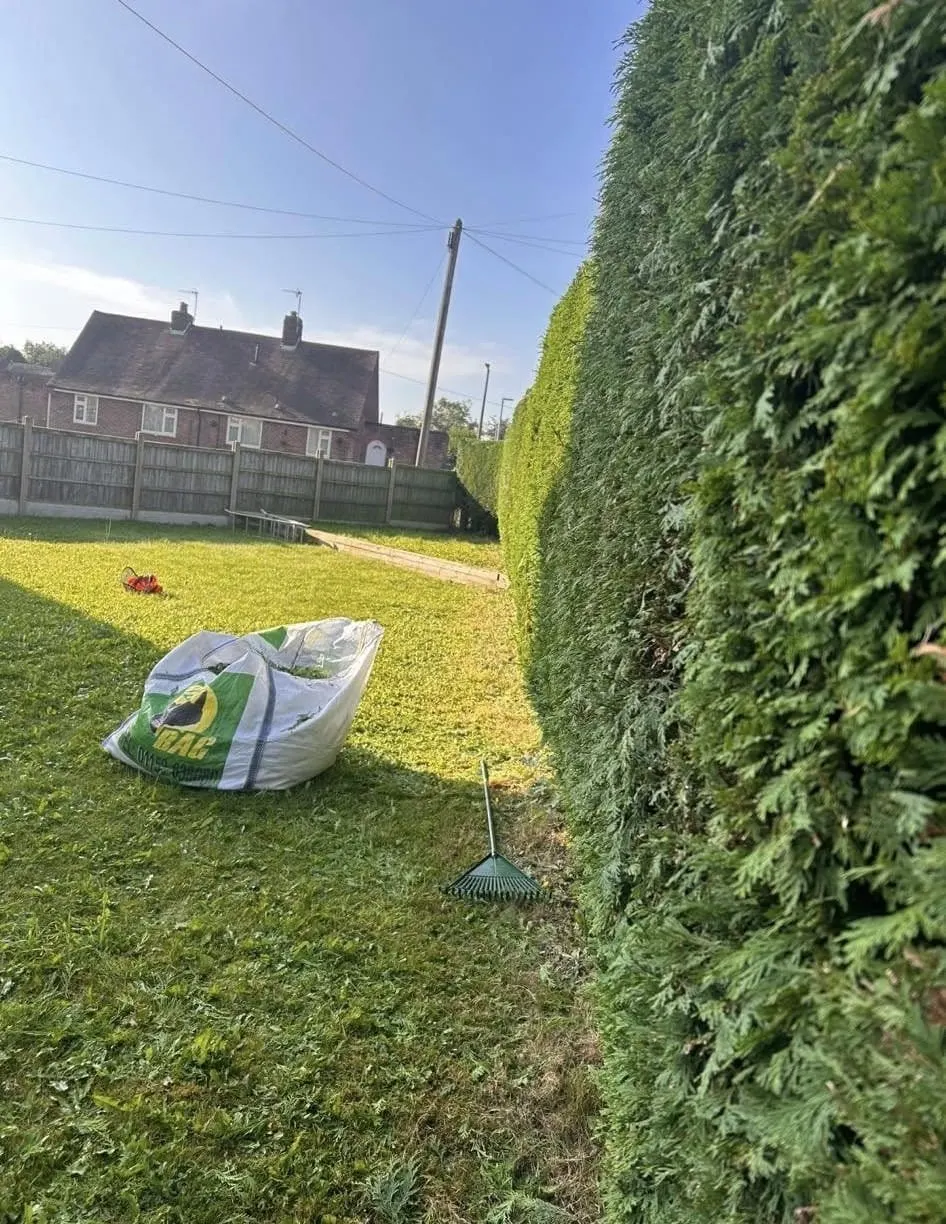
Renovating Neglected Hedges
Bringing a hedge back after years of neglect means cutting into old wood, and species decides whether that works.
Beech, hornbeam, privet, laurel, hawthorn and yew all carry dormant buds in old wood and will regenerate, staged over two or three seasons — the top and one face first, the second face once the first has refoliated. Leylandii and Lawson cypress will not regenerate from brown wood at all. Yew is the exception among conifers and takes hard renovation well, which is worth knowing given how much old estate yew there is across this district.
Old estate yew is worth saving
A neglected yew hedge that has gone shapeless can be cut hard back to the frame and will refoliate over a few seasons. Replacing it means waiting decades for the equivalent. Where we find a genuinely old yew boundary in a Worksop or Blyth garden we will always argue for renovating it over taking it out.
Staging, and why it is not spinning out the job
A hedge stripped on every face in one visit has nothing left to photosynthesise with. Two or three visits across several seasons is the difference between recovering a hedge that took decades to grow and losing it in an afternoon. We will tell you at the outset how it will look at each stage.
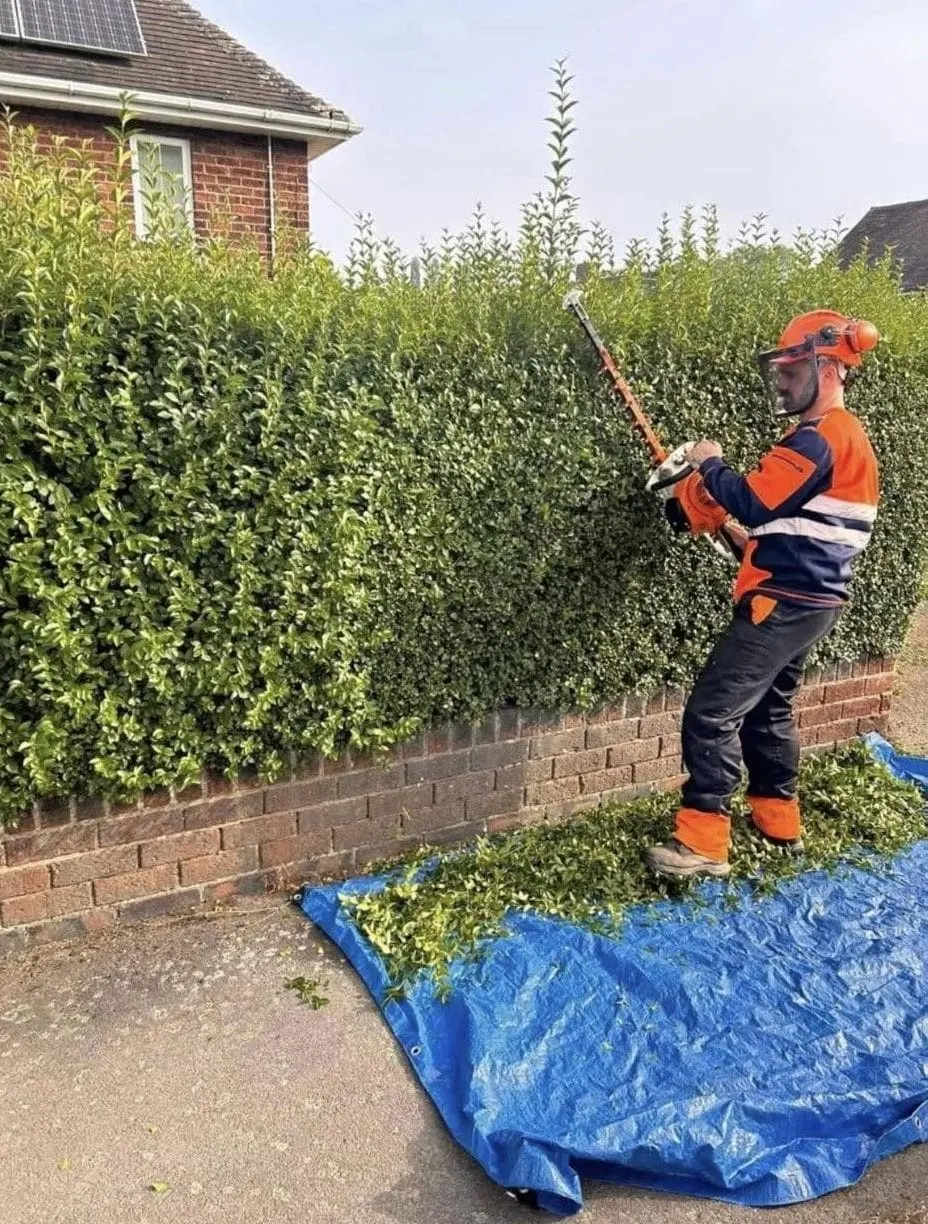
Conifer Screens in Worksop and Retford Gardens
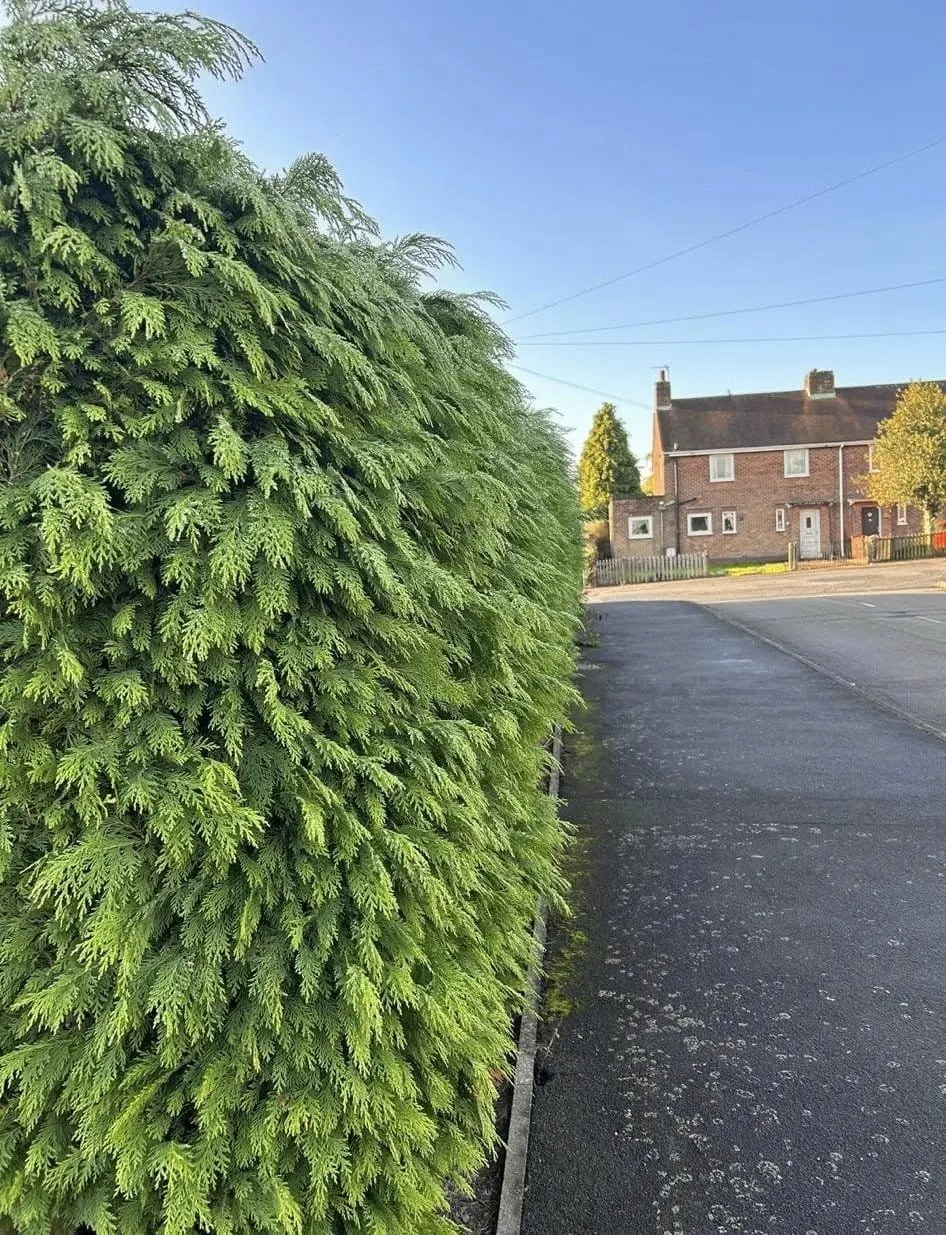
Leylandii planted across the Worksop and Retford estates in the 1970s and 80s is a steady share of the work here — past maintainable height, and usually with the green line now above where the owner wants the hedge.
Where green remains low enough, we reduce and keep it. Where it does not, we take the run out: cut down in sections, chip and remove all arisings, grind the stump line below ground level and clear the connecting surface roots, leaving a strip that is genuinely usable for fencing or replanting rather than technically clear.
What a full removal includes
Sectional take-down, all arisings chipped and removed, the stump line ground out below ground level and the roots between stumps cleared. If a fence is going in afterwards, tell us at quoting and we grind deeper and wider along the post positions.
Shared boundaries and high hedges
A hedge on a shared boundary needs the neighbour’s agreement before removal. An evergreen hedge over two metres can also fall under the High Hedges provisions of the Anti-social Behaviour Act 2003, which is a Bassetlaw District Council matter. We can explain where the line usually sits; an active dispute is one for the council.
What Hedge Cutting Costs in Bassetlaw
Garden hedges are priced by the job — height, depth, length, species, whether it is a trim or a hard reduction, and how much green waste comes off. Field boundaries are quoted differently, by the run and the method, because a mile of hawthorn cut on rotation and a hundred metres laid by hand are not comparable pieces of work. Access is a smaller factor here than in the towns we cover, since most Bassetlaw properties have somewhere to get a vehicle and chipper to, and that generally keeps costs down. A standing arrangement of one or two cuts a year works out cheaper per visit than one-off call-outs. Our tree surgery prices page explains how we quote.
What pushes a Bassetlaw quote up
Height beyond ladder reach, cutting from both faces, hard reduction rather than a trim, long conifer runs, and hand-laying rather than machine cutting on a field boundary. Laying is labour-intensive by nature — it is priced as a one-off investment in the hedge rather than as annual maintenance.
Where you can genuinely save
Cutting garden hedges annually instead of every third year, agreeing a fixed height and width, letting us leave chip on site as mulch or stacked habitat pile on a farm boundary, and booking a whole run of village properties on the same day so we set up once.
Estate, Farm & Commercial Contracts
We hold hedge maintenance contracts with farms, estates, schools, care homes and commercial landlords across Bassetlaw. On agricultural boundaries that usually means a rotational cutting plan rather than an annual flail — cutting a third of the total run each year keeps blossom and berry on the remaining two thirds, which is both better for the hedge and generally what environmental scheme agreements require. On commercial sites it is two scheduled cuts a year timed around nesting, with a written record of each visit. Fixed annual pricing, RAMS issued before attendance, £5 million public liability and 30-day invoice terms.
Rotational cutting on farm boundaries
Cutting the whole holding every year removes the blossom and berry the hedge produces on second-year wood. Cutting on a two or three year rotation keeps food and cover available across the farm each winter and produces a denser, healthier boundary, which is why most scheme agreements specify it.
Scheduled, recorded, invoiced once
Agreed dates, a written record of what was cut and when, and one annual invoice rather than a run of call-out charges. The record matters where a scheme inspection or a governing body needs evidence that the work was actually carried out to specification.
TB Tree Care — hedge cutting and laying across Bassetlaw
Hedge Trimming Bassetlaw — FAQs
How much does hedge trimming cost in Bassetlaw?
Garden hedges are priced by the job, based on height, depth, length, species and whether it is a trim or a hard reduction. Field boundaries are quoted by the run and the method instead, because machine cutting and hand laying are entirely different pieces of work. Quotes are free and we can usually price a garden hedge from photographs and rough measurements.
What is hedge laying and is it worth doing?
Laying means part-cutting the stems near the base, bending them over and weaving them between stakes so they keep growing horizontally. It rebuilds a hedge from the bottom rather than trimming the top of a failing one, and produces a genuinely stock-proof boundary far denser at the base than any cut hedge. On a hedge that has gone hollow after years of flailing it is the only real fix.
When can hedge laying be done?
Dormant season only, roughly November to early March. That keeps the work clear of the nesting season and gives the hedge a full growing year to establish new growth from the laid stems. Laying outside that window stresses the hedge and risks disturbing nesting birds.
Do I need permission to remove a hedge on farmland?
Possibly. Removing a countryside hedgerow over 30 years old that meets the criteria requires notice to Bassetlaw District Council under the Hedgerows Regulations 1997, and removing an important hedgerow without consent is an offence. Garden hedges are outside those regulations. If the job is a removal on agricultural land we will set out where you stand before anything starts.
Does a Retford conservation area affect my hedge?
Cutting an ordinary hedge is unaffected. What is affected is work on any tree within the hedge line — inside Retford’s conservation areas, including the 2022 extension, that needs six weeks’ notice served on Bassetlaw District Council. We check conservation status and the TPO register before quoting.
How often should a garden hedge be cut?
It depends on the species. Privet, box and yew hold their shape best on two cuts a year, usually late spring and late summer. Leylandii and Lawson cypress need at least one annual cut to stay inside green growth. Beech and hornbeam are generally fine on a single late-summer cut.
Can my old yew hedge be saved?
Almost certainly, and it is worth doing. Yew is the one conifer that regenerates from old wood, so a neglected yew hedge can be cut hard back to the frame and will refoliate over a few seasons. Given the amount of old estate yew across this district, replacing one is usually the wrong call.
My leylandii has got away from me — can you cut it back?
Only as far as the green growth extends. Leylandii carries no dormant buds in brown wood, so cutting below the green line leaves a permanent brown screen. If your hedge is past reducing we will say so before quoting and talk through removal and replanting instead.
Can you cut hedges during the nesting season?
We can, after checking, and on a long native hedgerow that check genuinely matters. Damaging an active nest is an offence under the Wildlife and Countryside Act 1981, so between March and August we inspect before cutting and leave any section holding an active nest until the birds have fledged.
Which areas of Bassetlaw do you cover?
Worksop, Retford, Blyth, Tuxford, Carlton in Lindrick, Harworth, Misterton, Sturton le Steeple, Rampton and the villages and farmland between, including the Idle and Ryton valleys. There is no call-out charge anywhere in the district and every quote is free.
Are you qualified and insured?
Yes. Our operatives are NPTC-certified and we carry £5 million public liability insurance with full employer’s liability cover. Certificates are available on request before work starts, and RAMS documentation is issued as standard on farm, estate and commercial contracts.