Gedling village sits just east of Carlton in a shallow valley that feels noticeably more rural than the surrounding suburban spread — older stone and brick properties, the churchyard of All Hallows on the hill, generous garden plots, and mature specimen trees that have had space to develop properly over decades. It also sits immediately adjacent to Gedling Country Park, one of the most significant green corridors in the Greater Nottingham area. For homeowners in Gedling, these factors combine to create a tree management environment where professional advice is particularly valuable: large mature trees, ecological boundaries, and a planning authority that takes tree protection in this area seriously. This guide covers everything you need to know about finding a tree surgeon in Gedling, NG4.
Tree Surgery Services in Gedling, NG4
TB Tree Care provides professional arboricultural services across Gedling village and the surrounding NG4 area, including Carlton, Netherfield, Colwick, and Burton Road. Our services include:
- Crown reduction — reducing height and spread to a defined objective, maintaining natural form (BS 3998:2010)
- Crown lifting — raising the lower canopy to improve access, light, and clearance
- Crown thinning — reducing density within the canopy without altering overall size
- Tree felling and dismantlement — including aerial rigging for confined or restricted-access gardens
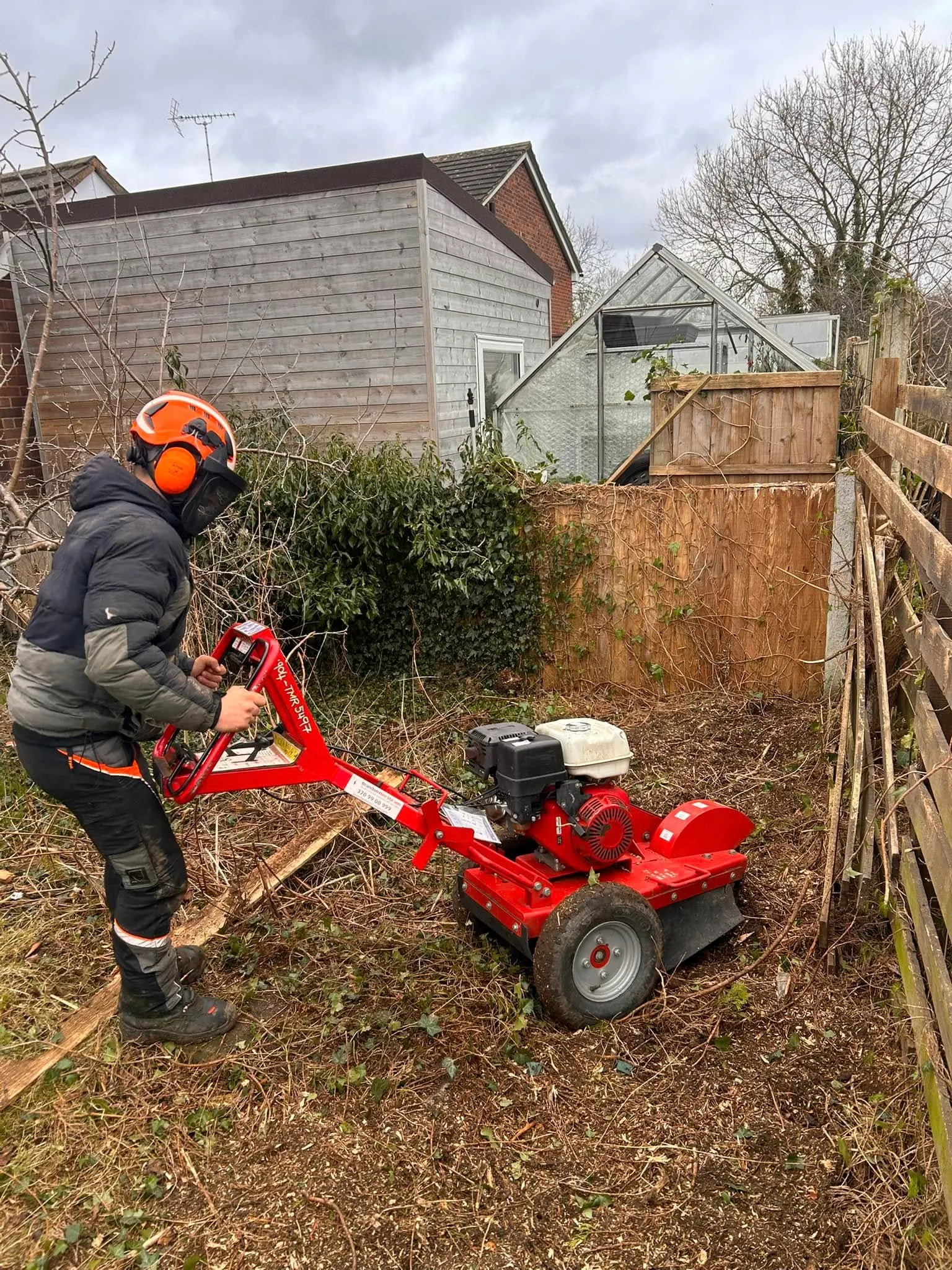
- Stump grinding — below-ground stump removal
- Deadwood removal — reducing storm and safety risk from older specimens
- Oak tree inspections and works — assessment, structural pruning, and crown management on oak specimens
- Emergency tree work — storm response across NG4
- Tree surveys and arboricultural reports — condition assessments and BS 5837 reports
- TPO consent applications to Gedling Borough Council
Gedling Country Park and the Trees That Border It
Gedling Country Park was created on the site of Gedling Colliery following its closure in 1991 and now provides over 200 hectares of green space connecting Gedling and Carlton with the wider Nottinghamshire countryside. The park’s boundary runs close to a number of residential gardens on the eastern edge of the village, and trees in these boundary positions have specific implications that homeowners should be aware of.
Ecological Connectivity
Trees adjacent to the country park form part of a wildlife corridor that provides habitat and movement routes for bats, birds, hedgehogs, and other species. Before carrying out significant crown works or removal of mature trees near the park boundary, a preliminary ecological check is good practice — and in some cases legally required. If a tree has cavities, significant ivy coverage, or loose bark, it should be assessed for bat roost potential before major works proceed. We carry out preliminary roost potential assessments as standard on qualifying trees near ecological corridors.
TPO Status Near Green Space
Trees adjacent to public green space are statistically more likely to be subject to Tree Preservation Orders — local authorities typically protect trees in boundary positions where their removal would affect the visual or ecological quality of the adjacent open space. If your garden backs onto Gedling Country Park, the mature trees on your boundary are worth checking against the Gedling TPO register before any works are considered.
Oak Trees in Gedling: Management, Law, and Ecology
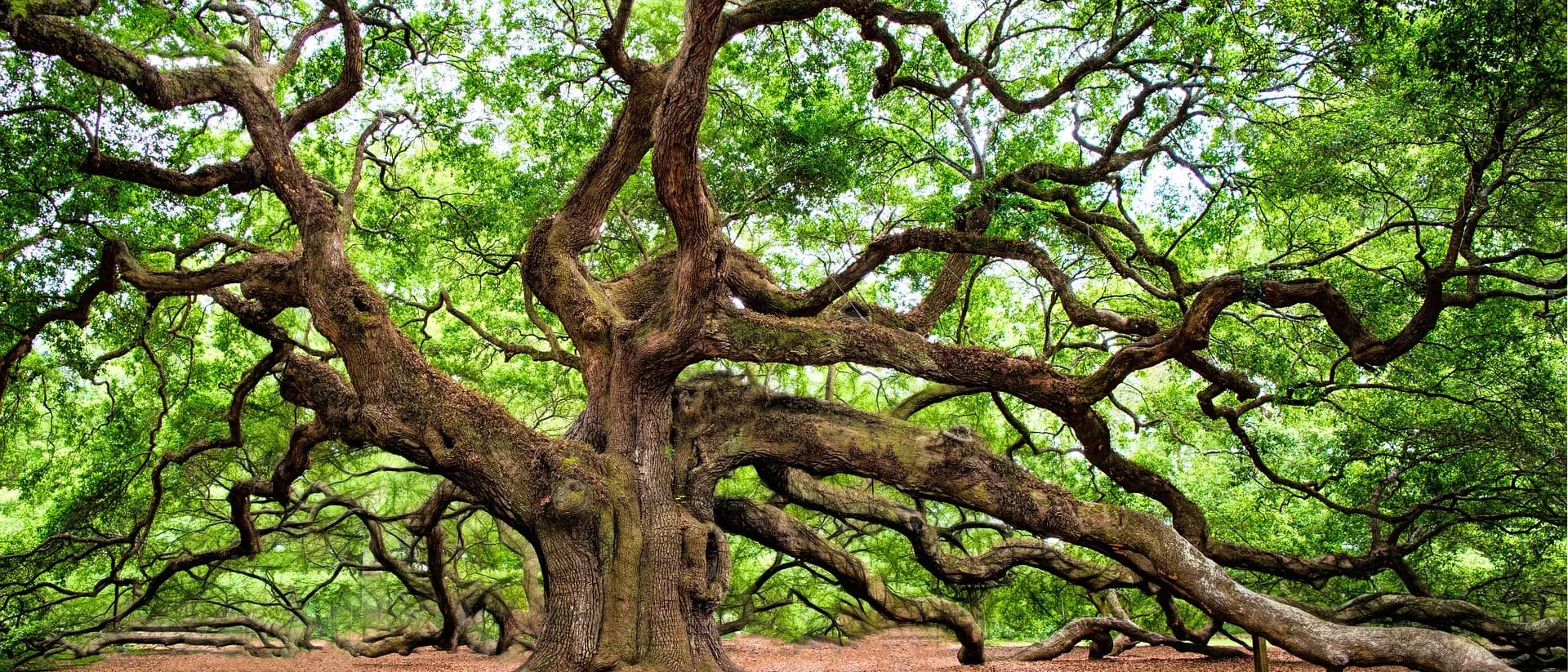
English oak (Quercus robur) is arguably the most ecologically significant native tree species in Britain, supporting over 600 species of invertebrate, providing nesting and roosting habitat for bats, birds, and small mammals, and contributing to the character of the Gedling landscape in a way that no other species quite matches. Many of the oaks in Gedling’s residential gardens are genuine veteran or semi-veteran specimens — field boundary trees or remnant woodland trees absorbed into the settlement as it expanded — and their management carries responsibilities that go beyond routine garden maintenance.
What Oak Work Commonly Involves
The most frequent oak management requests we receive in Gedling are:
- Crown lifting — removing lower limbs to improve light and headroom beneath the canopy; very commonly needed on oaks that have spread over gardens and boundaries
- Deadwood removal — selective removal of deadwood above 50mm that presents a risk below; note that ecologically valuable deadwood higher in the crown that is not over a target should generally be retained
- Crown reduction — reducing height and spread where proximity to buildings has become a concern; Gedling Borough Council will typically require supporting documentation for significant oak crown reduction
- Inspection and condition report — a written professional assessment, particularly useful for insurance purposes or where root-related subsidence is suspected
For any significant works on mature oaks in Gedling, Gedling Borough Council’s tree officers will typically want to see photographic evidence and a written reason for the proposed works. We prepare all supporting documentation as part of our TPO application service.
Gedling Village Conservation Area
The historic core of Gedling village, including the area around All Hallows Church, falls within a designated conservation area. Within the conservation area, six weeks’ prior notification to Gedling Borough Council is required for any significant tree works on trees over the 75mm stem diameter threshold at 1.5m height — regardless of whether a TPO exists. The notification requirement exists precisely because the council wishes to assess whether a TPO should be made before any works proceed.
Conservation area notification is sometimes overlooked by homeowners who assume that because their tree is not individually listed on the TPO register it is unprotected. This is incorrect, and carrying out works without the required notification is a criminal offence. We check conservation area boundaries as part of every site visit in Gedling and handle all notification paperwork.
Trees and Subsidence in Older Gedling Properties
Some of the older stone and brick-built properties in Gedling village have relatively shallow foundations by modern standards — particularly the pre-1950 houses in the original settlement core. The relationship between mature tree root systems and shallow foundations is a frequently misunderstood area where professional advice genuinely matters.
Root-related subsidence is most commonly associated with shrinkable clay soils (classified as shrinkability class moderate-to-high) in combination with large-canopied trees and prolonged dry summers. The Gedling area has pockets of clay-rich soil particularly on the lower slopes towards Carlton, and where movement has been identified, a specialist structural engineer’s assessment alongside an arboricultural opinion gives the most complete picture of what is happening and what the options are.
An important caveat: removing a large tree from clay soil is not automatically the right response to suspected root-related subsidence. Sudden removal can cause ground heave as the soil rehydrates over the following years — sometimes causing more movement than the original problem. We work alongside loss adjusters and structural engineers when required and provide the arboricultural input that informs a properly reasoned decision.
Qualifications and Insurance
Our NPTC-qualified team holds current certificates across all relevant chainsaw and aerial work units. All work follows BS 3998:2010. We carry full public liability insurance and can provide our certificate and a RAMS document before any work begins. We also regularly provide written arboricultural reports for insurance claims involving tree-related damage in the NG4 area.
Frequently Asked Questions — Tree Surgeon in Gedling
My oak tree is very large and close to the house — should I be concerned?
Not necessarily. A healthy, well-maintained oak near a house is not automatically a problem. The key factors are the tree’s condition, the type of foundation the house has, whether the soil is a shrinkable clay, and whether any movement has been observed. We can provide an assessment that addresses all of these. If there is genuine concern, we’ll tell you honestly what the options are.
The council turned down my TPO application for tree removal — what can I do?
A refused TPO consent application can be appealed to the Planning Inspectorate. We can advise on whether an appeal is likely to succeed based on the council’s reasons for refusal, and can prepare the supporting arboricultural evidence if an appeal is the right path.
Do I need to notify the council before cutting a tree near Gedling Country Park?
Possibly. If your tree is in the conservation area or subject to a TPO, yes. We check both as part of every site visit. The country park boundary itself does not automatically trigger notification — but the combination of TPO likelihood and ecological sensitivity near the park means a check is always warranted.
Do you cover the full NG4 area?
Yes — we cover Gedling village, Carlton, Netherfield, Colwick, and all of NG4. See our coverage page for the full list of areas served.
Need a tree surgeon in Gedling? We cover all of NG4. NPTC qualified, fully insured, and experienced with Gedling Borough Council TPO applications, conservation area notifications, and oak tree management near Gedling Country Park.