Belper sits in one of the most distinctive landscapes in the East Midlands — the steep-sided Derwent Valley, carved by one of England’s most historically significant rivers and designated as a UNESCO World Heritage Site. For homeowners managing trees on Belper’s hillside streets, the combination of challenging topography, a high-value heritage landscape, and the prevalence of ash dieback in Derbyshire makes professional tree management here more complex than almost anywhere else we work. This guide explains what tree surgery in Belper, DE56 involves, what your legal obligations are under Amber Valley Borough Council, and what you should be looking out for on your property right now.
Tree Surgery Services in Belper, DE56
TB Tree Care provides the full range of arboricultural services across Belper and the wider DE56 postcode, including Milford, Duffield, Belper Lane End, Farnah Green, and Shottle. Our services in the Belper area include:
- Crown reduction and reshaping — reducing height and spread in compliance with BS 3998:2010, retaining natural form
- Crown lifting — raising the lower canopy to improve clearance from buildings, vehicles, and people
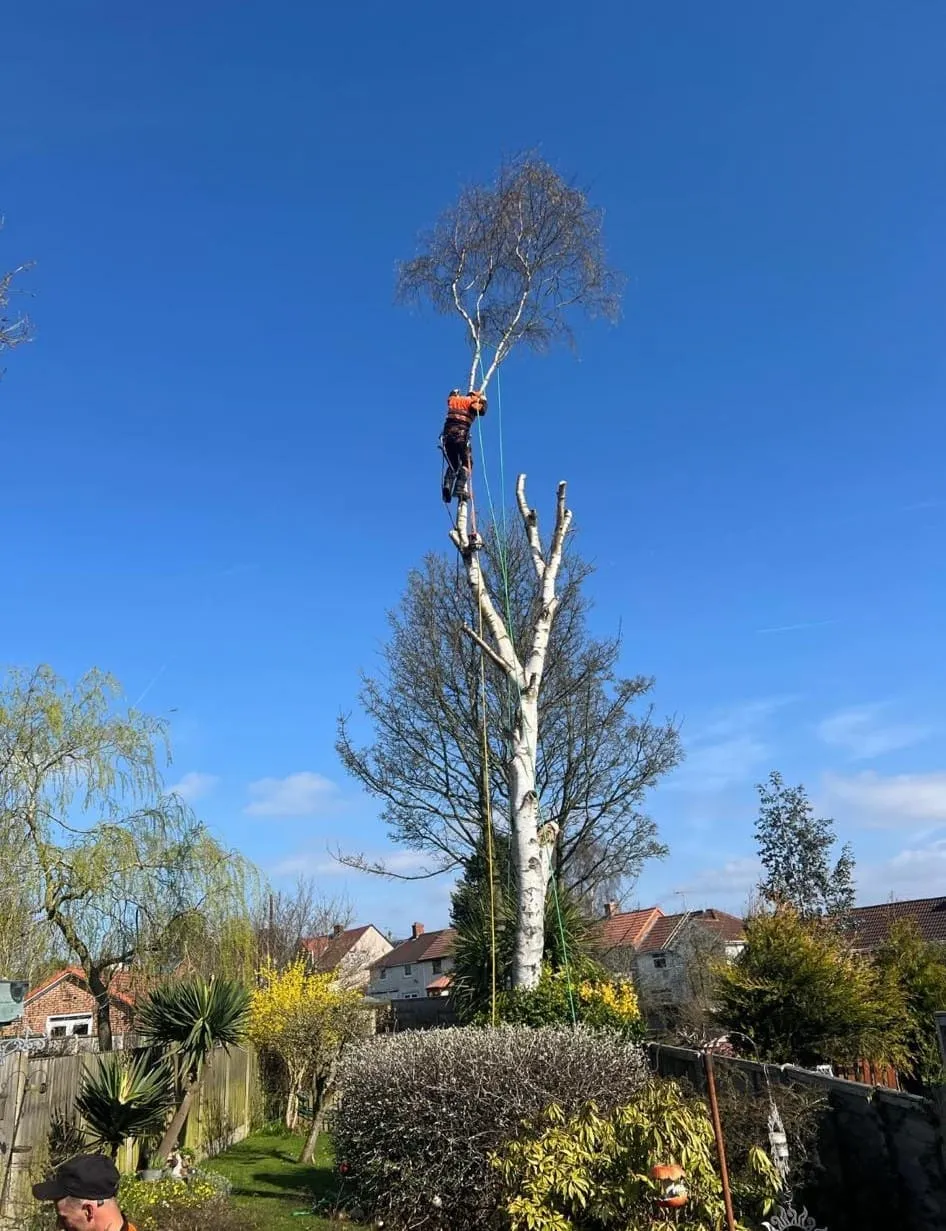
- Tree felling and technical dismantlement — including section-by-section rigging techniques for confined hillside gardens
- Stump grinding — removing stumps below ground level to allow reinstatement or replanting
- Ash dieback assessment and management — staged inspections, risk assessment, and managed removal or retention programmes
- Deadwood removal and crown cleaning — selective removal of deadwood presenting risk to people or property
- Emergency tree work — storm response and rapid callout across DE56
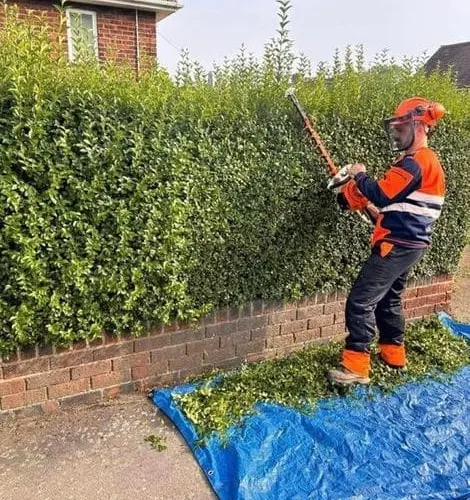
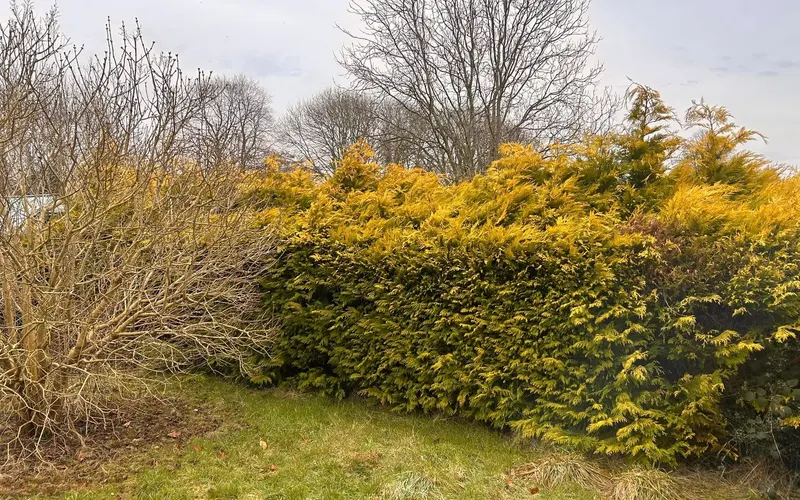
- Hedge cutting — including overgrown conifers, mixed boundary hedges, and formal garden hedging
- Tree surveys and condition reports — written assessments to BS 5837 standard for planning and insurance purposes
- TPO applications to Amber Valley Borough Council — full application preparation and submission service
Hillside Tree Management: What Changes on a Slope
A tree growing on sloped ground behaves differently from one on a level plot, and the management decisions around it need to account for that. On the hillside streets above Belper’s A6 corridor — particularly on the slopes rising towards Belper Lane End, Farnah Green, and the western edge of the town — we see these specific issues regularly:
Asymmetric Root Development
Trees on slopes develop a larger, more structural root plate on the uphill side to counterbalance gravity. This asymmetric root mass commonly causes problems for retaining walls, garden terracing, and the foundations of properties lower on the slope. If you have noticed movement in a stone garden wall or cracking in a lower outbuilding, root pressure from an uphill tree is one of the first things worth investigating.
Soil Saturation and Root Failure Risk
The hillside geology around Belper — predominantly carboniferous sandstone and shale with clay layers — creates variable drainage conditions. After extended wet periods, areas of clay-rich soil can become saturated rapidly, reducing the root anchorage of shallow-rooted trees significantly. We see an elevated incidence of wind-related root failure and lean development on Belper’s hillside streets following prolonged winter rainfall, and stability assessments are a routine part of our work in this area.
Confined Access
The narrow rear lanes and terraced streets of older Belper — particularly around the mill workers’ housing near the North Mill — make crane or MEWP access impossible for many properties. Technical rigging and aerial dismantlement using ropes is the only safe approach for large trees in these locations, requiring a higher level of skill and more time than open-access felling.
Species Most Commonly Managed in DE56
The Derwent Valley corridor and the hillside planting around Belper supports a distinctive range of species:
- Ash (Fraxinus excelsior) — historically the dominant hedgerow and garden tree in this part of Derbyshire. Now widely affected by Chalara ash dieback. Many specimens in Belper are in mid-to-late stage decline and present a structural risk that requires professional assessment.
- Sycamore — prolific across the hillside streets, tolerant of exposure and altitude. Fast-growing and capable of shading out neighbours within a decade. Sycamore responds well to crown reduction but regrows vigorously and requires regular management.
- Beech — common in the larger gardens towards Milford and Duffield. Beech develops considerable structural complexity in maturity and requires experienced aerial work for crown reduction. Also sensitive to soil compaction and root disturbance.
- Silver birch and rowan — widespread on the upper slopes; relatively short-lived (birch typically 60–80 years) but ecologically important for birds and invertebrates. End-of-life management of birch in confined gardens is a frequent call in the DE56 area.
- Wych elm — occasional survivors along field margins and in hedgerows at the town’s edge. Worth monitoring for regrowth management and signs of secondary infection.
Ash Dieback in Belper and Amber Valley
Chalara ash dieback (Hymenoscyphus fraxineus) has now reached near-total distribution across Derbyshire, and Belper is no exception. Ash is one of the most common trees in DE56 — in the hedgerows, along field boundaries, in private gardens, and as self-seeded specimens that have established themselves along walls and in corners of older properties over the past 30–40 years.
The critical point for Belper homeowners is that a declining ash tree is not simply an aesthetic problem — it is a structural risk problem. As Chalara progresses, the wood in affected sections becomes brittle and unpredictable. Branches fail without the usual warning signs of a healthy tree under stress, and failures occur in calm conditions as well as in storms. If you have an ash tree in your DE56 garden that has not been assessed in the past 12–18 months, an inspection is now overdue.
Where the tree is TPO-protected, consent from Amber Valley Borough Council is required before any significant management or removal can proceed — even where disease is the reason. We have extensive experience managing Chalara-related TPO applications in the Amber Valley area and can advise on the fastest legitimate route to consent where urgent action is needed.
The Derwent Valley World Heritage Site and Planning Sensitivity
Belper is one of the anchor settlements of the Derwent Valley Mills UNESCO World Heritage Site — a designation that reflects the exceptional significance of this corridor as the cradle of the industrial revolution. The WHS designation does not directly regulate garden trees, but it informs the planning policy context in which the local planning authority (Amber Valley Borough Council) operates.
In practice, this means that applications involving trees near heritage assets, or trees that contribute to the visual setting of the valley corridor, are assessed with greater care than standard applications in non-sensitive locations. We are familiar with the heritage planning context in Belper and factor this into how we prepare and frame consent applications in the area.
Tree Preservation Orders — Amber Valley Borough Council
Amber Valley Borough Council maintains a register of Tree Preservation Orders across Belper and the surrounding area. The town centre, riverside, and the streets adjacent to the North Mill complex are all areas where TPO protection is common. The conservation area around Belper Bridge and the historic mill buildings also triggers notification requirements for all significant tree work, regardless of TPO status.
We check the Amber Valley TPO register and conservation area boundaries as part of every site visit in Belper and advise on consent requirements before any work is proposed. All consent applications are handled by us — from initial enquiry through to council determination.
Why Choose a Local Arborist for Belper Tree Surgery?
Local knowledge matters in a place like Belper. Understanding the Derwent Valley geology, the specific structural challenges of hillside gardens, the prevalence and staging of ash dieback in DE56, and the planning sensitivity of the Heritage Site boundary is not something that comes from a generic tree surgery checklist — it comes from regular work in the area. Our NPTC-qualified team works across Belper, Amber Valley, and the surrounding DE56 area regularly, and we bring that familiarity to every job.
- NPTC qualified across all relevant units (aerial work, felling, chipping)
- Full public liability insurance — certificate available on request
- All work to BS 3998:2010
- Free site visits and itemised quotes
- Full TPO application service included where required
Frequently Asked Questions — Tree Surgery in Belper
My ash tree looks unwell — do I need to act urgently?
If you’re seeing crown dieback, wilting shoot tips, or bark lesions on an ash tree, it should be professionally assessed within the next few weeks — not next season. Chalara-affected ash trees can progress to structural hazard faster than most other diseases, and if the tree is near a building or path the risk window is real.
Can a tree surgeon work on a hillside property in Belper?
Yes — we regularly work on the hillside streets above Belper town centre using aerial rigging techniques that do not require machine access. A site visit allows us to assess the access constraints and quote appropriately for the method required.
Do I need consent for tree work near Belper’s conservation area?
If your tree is within the conservation area boundary and has a stem diameter over 75mm, yes — six weeks’ prior notification to Amber Valley Borough Council is required, even without a TPO. We handle this as standard.
Can you help with a tree on a boundary shared with a neighbour?
Yes. We advise on boundary tree situations regularly — balancing the legal positions of both parties with the arboricultural needs of the tree. We can provide a written assessment if a formal record of advice is needed.
Need a tree surgeon in Belper or the Derwent Valley? We cover DE56, including Belper, Milford, Duffield, and Belper Lane End. NPTC qualified, fully insured, experienced with Amber Valley Borough Council and the heritage planning context of the Derwent Valley UNESCO site.