Warsop and Market Warsop sit at the northern edge of Nottinghamshire where the suburban fringe of Mansfield gives way to something older, greener, and ecologically more significant: the southern edge of the Sherwood Forest landscape. This is not the commercial theme park version of Sherwood — it is the genuine ancient woodland matrix of native oak, birch, and heath that once covered much of central Nottinghamshire and still survives in fragments, corridors, and specimen trees throughout the NG20 area. For homeowners in Warsop, understanding your trees — their likely age, their ecological value, their legal status, and the specific risks they present in this landscape — is more important than in many other parts of the county. This is your complete guide to tree surgery in Warsop, NG20.
Tree Surgery Services in Warsop, NG20
TB Tree Care provides arboricultural services across Warsop, Market Warsop, Church Warsop, Warsop Vale, and Spion Kop. Our services in the NG20 area include:
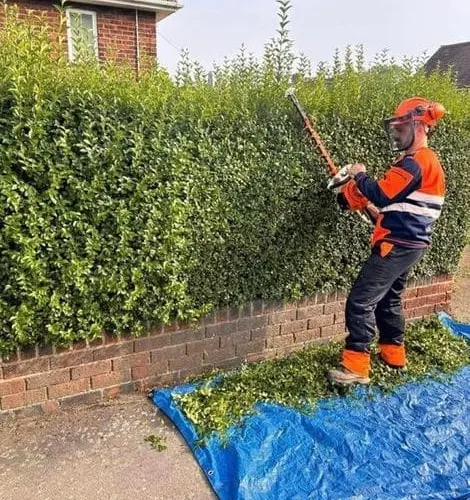
- Crown reduction and reshaping — compliant with BS 3998:2010, maintaining natural form
- Crown lifting — raising lower canopy for access, light, and clearance
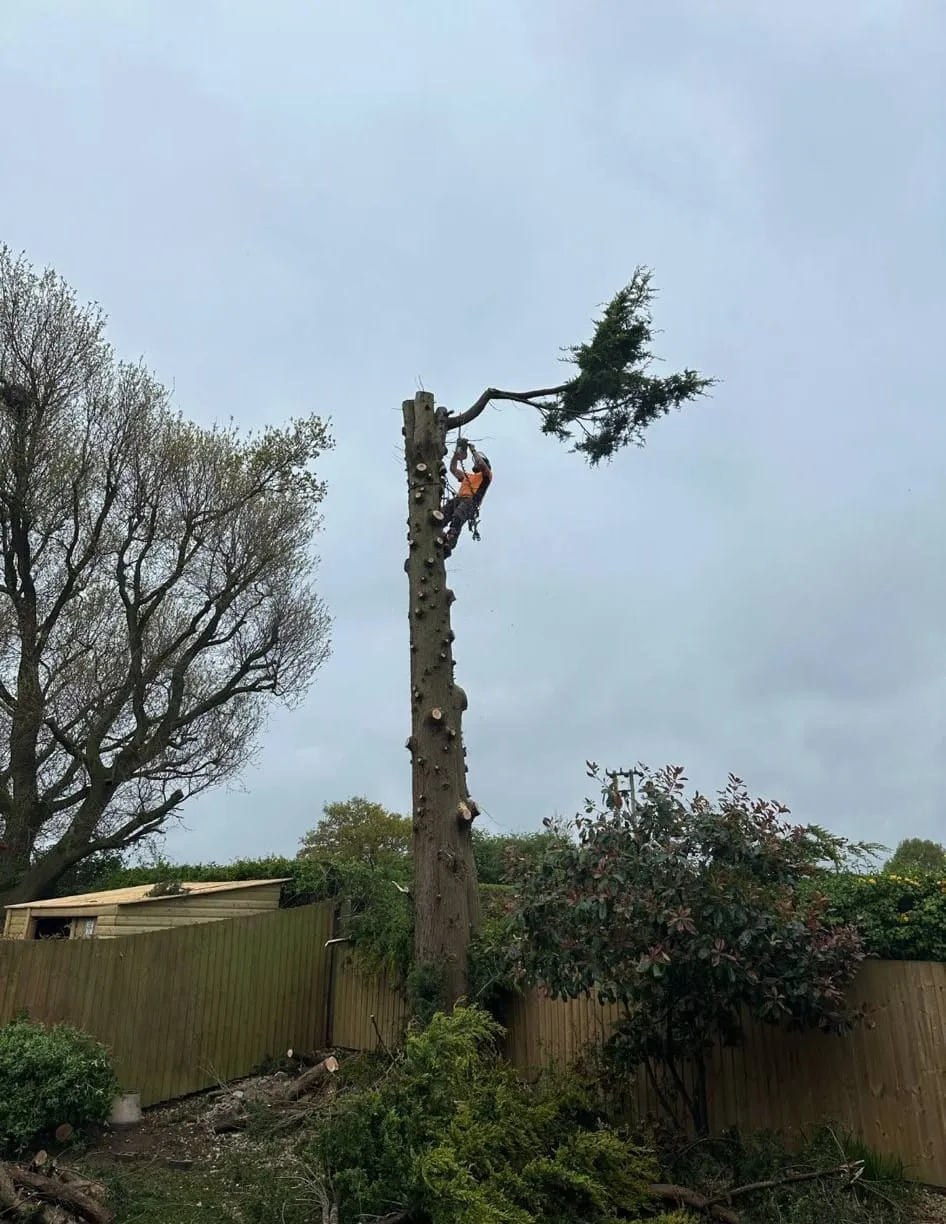
- Tree felling and technical dismantlement — including confined-space section work in restricted miners’ cottage gardens
- Stump grinding — below-ground removal
- Ancient and veteran tree assessments — condition reports for Sherwood-edge specimens
- Ash dieback assessment and management — inspection, risk assessment, and managed removal or retention
- Deadwood removal — safety management for large mature specimens
- Emergency tree work — rapid storm response across NG20
- Tree surveys and arboricultural reports — condition assessments, BS 5837 reports
- TPO consent applications to Mansfield District Council
- Watercourse consent coordination — for works near the River Meden
The Sherwood Forest Edge: What It Means for Your Garden Trees
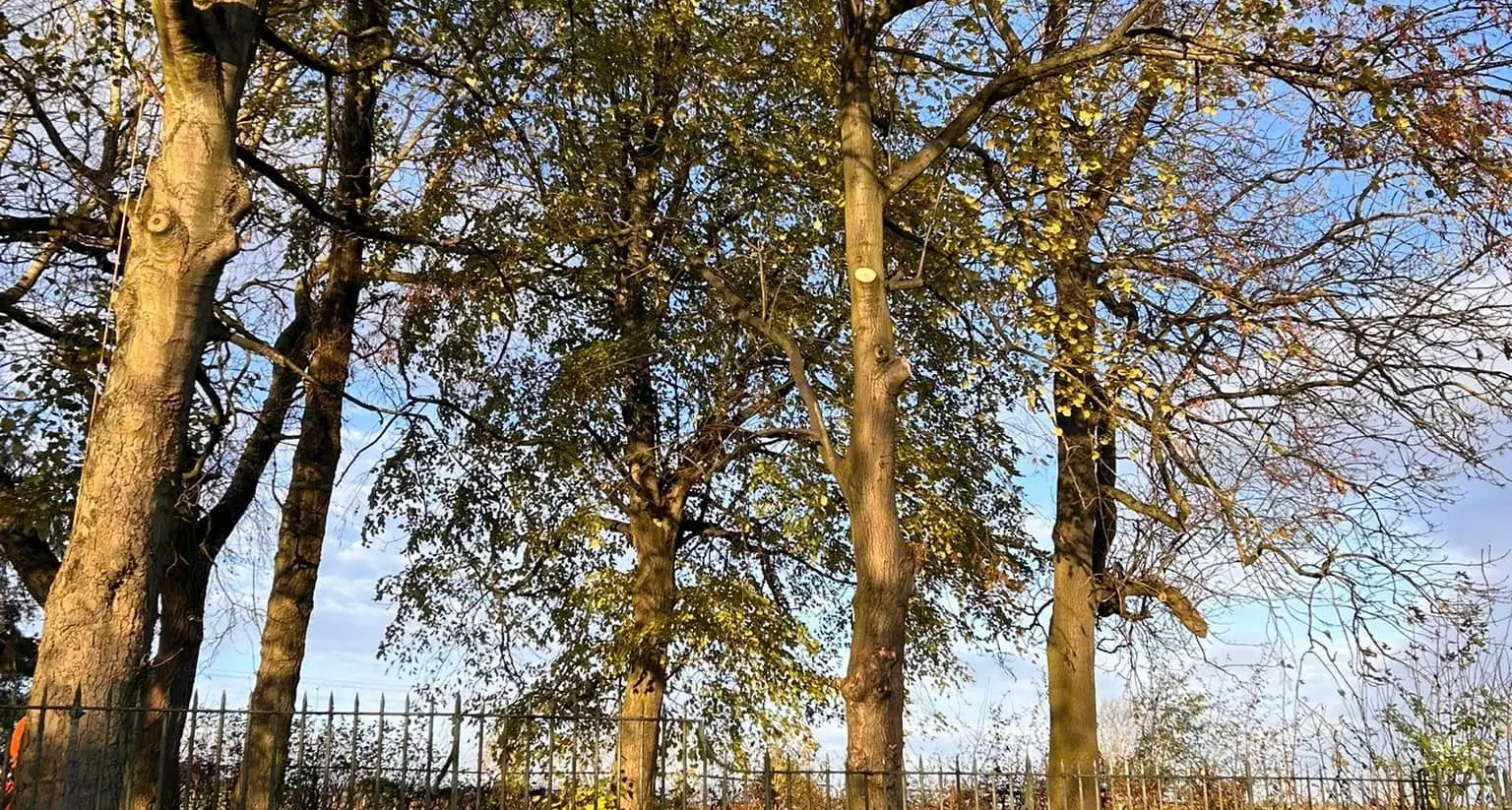
The Sherwood Forest area is one of England’s most important ancient woodland landscapes. At its core are ancient and veteran oak trees — individual specimens that have survived for several centuries — and the landscape around Warsop contains a meaningful number of trees that meet the criteria for ancient or veteran status. These trees are not restricted to forestry land: some are boundary oaks that have been absorbed into residential plots as the town has expanded, and others are isolated specimens in larger garden plots that may predate the current property by hundreds of years.
How to Recognise an Ancient or Veteran Tree
Ancient and veteran trees are characterised by features that develop over very long timescales:
- A very large girth relative to height — ancient oaks are typically short, spreading, and enormously girthed rather than tall
- Significant deadwood in the crown and stem — not a sign of poor health but a deliberate ecological feature supporting specialist insects, fungi, and bats
- Hollow stem or major cavities — important bat roost habitat
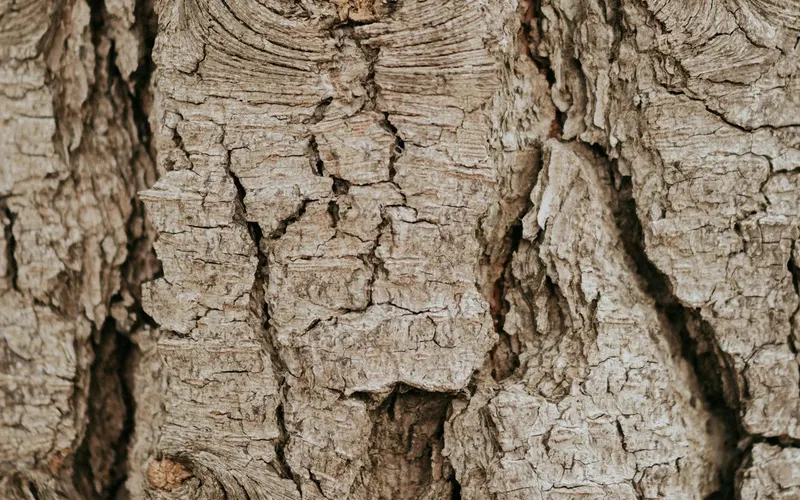
- Epiphyte communities — ferns, mosses, and lichens on the bark
- Signs of historical management — old pollard heads, historic coppice structures, evidence of boundary marking
If a tree in your Warsop garden has any of these characteristics, treat any proposed works with particular caution and seek professional advice first. Ancient and veteran trees are among the most heavily protected in English planning policy and are almost always subject to TPO or equivalent protection. They are also the most ecologically irreplaceable — a 400-year-old oak supports a biological community that cannot be replicated by a hundred newly planted trees.
The River Meden Corridor
The River Meden flows through the Warsop area, and its riparian corridor is a significant linear habitat for otters, water voles, kingfishers, and multiple bat species that use the river as a foraging and commuting route. Trees in and immediately adjacent to the Meden corridor — alders, crack willows, and field maples predominantly — provide bank stabilisation, water temperature regulation, and in-channel fallen timber habitat.
Works involving trees within or near the river corridor involve additional regulatory considerations:
- If the River Meden is classified as a main river, Environment Agency consent is required under the Flood Risk Activities Regulations for works within 8 metres of the bank
- If it is an ordinary watercourse, consent from Nottinghamshire County Council as Lead Local Flood Authority is needed for any works that might affect flow
- Where otter or water vole signs are present in the river corridor, a licensed ecological survey may be required before significant tree works can proceed
We check watercourse classification and consult with the relevant regulatory body before any work near the Meden, protecting our clients from inadvertent regulatory breach.
Ash Dieback in NG20
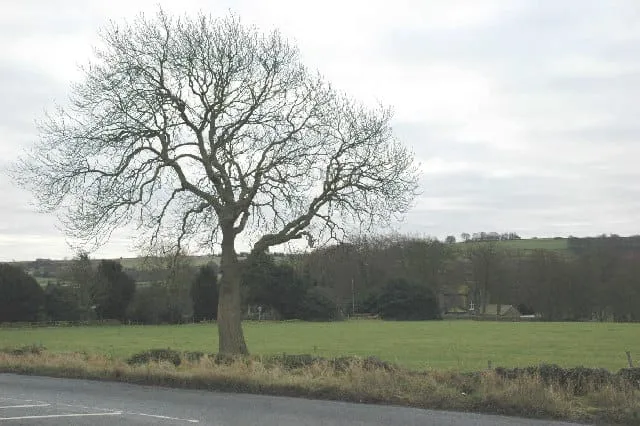
Chalara ash dieback (Hymenoscyphus fraxineus) has reached widespread distribution across Nottinghamshire, and the Warsop area is no exception. Ash is one of the most important species in the Sherwood edge landscape, present in hedgerows, along field margins, as garden specimens, and as the dominant tree in some sections of the River Meden corridor.
A small proportion of ash trees show genetic tolerance to Chalara and may survive the epidemic in reduced form. Many others, particularly younger trees and those under other stresses, decline to the point of structural hazard within three to five years of visible infection. The key indicator to watch for is not just the dieback itself but the unpredictable brittleness of the wood in declining sections — which creates a risk profile different from that of a healthy dead tree. If you have an ash tree in your NG20 garden, a professional assessment is now a standard part of responsible ownership.
Tree Preservation Orders: Mansfield District Council
Warsop, Market Warsop, Church Warsop, and Warsop Vale fall within Mansfield District Council’s administrative area, and the council maintains a register of Tree Preservation Orders across NG20. Given the area’s proximity to Sherwood Forest and the ecological significance of the landscape, TPO protection is more common here than in many of the more urbanised areas we cover. Before any work is considered on a significant tree in the Warsop area, the Mansfield District Council TPO register should be checked.
We check the register as part of every site visit and advise on consent requirements before any works are scoped. Where a consent application is needed — including for disease-related works on ash trees — we prepare and submit it on your behalf. The standard determination period is eight weeks, with emergency consent available faster where immediate safety risk can be evidenced.
Technical Dismantlement in Confined Gardens
Much of Market Warsop’s older housing stock — the miners’ cottages and later colliery housing that forms the character of the town — was built on modest plots with limited rear access. When a large tree needs to be removed from a confined space in one of these gardens, standard felling methods are not an option. The work requires aerial rigging: dismantling the tree section by section from the top down, lowering each piece on ropes to a controlled landing zone, and working around fences, outbuildings, and adjacent properties with a standard of precision that demands significant technical skill.
We are experienced in confined-space technical dismantlements across NG20 and carry the rigging and lowering equipment required for this type of work. We also carry full public liability insurance and provide RAMS documents before any technical work begins.
Frequently Asked Questions — Tree Surgeon in Warsop
I think my tree might be ancient — what should I do?
The first step is a professional assessment. We can identify the markers of ancient and veteran tree status, advise on the likely TPO status and any other protective designations that apply, and recommend a management approach that is appropriate for a tree of this ecological significance. Do not carry out any works until you have this advice.
My ash tree near the Meden is dying — can I just cut it down?
Probably not without consent. Even a diseased ash tree retains its TPO protection if one exists, and trees near the River Meden may be subject to Environment Agency consent requirements as well. We handle the consent process end to end and can advise on the fastest legitimate route to action where the tree poses a genuine risk.
How quickly can you respond to storm damage in Warsop?
We prioritise storm damage response across NG20 and typically respond within 24 hours. For situations involving roads or immediate public safety, contact Mansfield District Council’s emergency line or the police as a first step.
Do you cover Church Warsop and Warsop Vale?
Yes — we cover all of NG20 including Market Warsop, Church Warsop, Warsop Vale, and Spion Kop. We also work regularly in Southwell and across the wider Mansfield area. See our full coverage page.
Need a tree surgeon in Warsop or Market Warsop? We cover all of NG20. NPTC qualified, fully insured, and experienced with Mansfield District Council TPO applications, ancient oak assessments, and the ecological sensitivities of the Sherwood Forest edge.