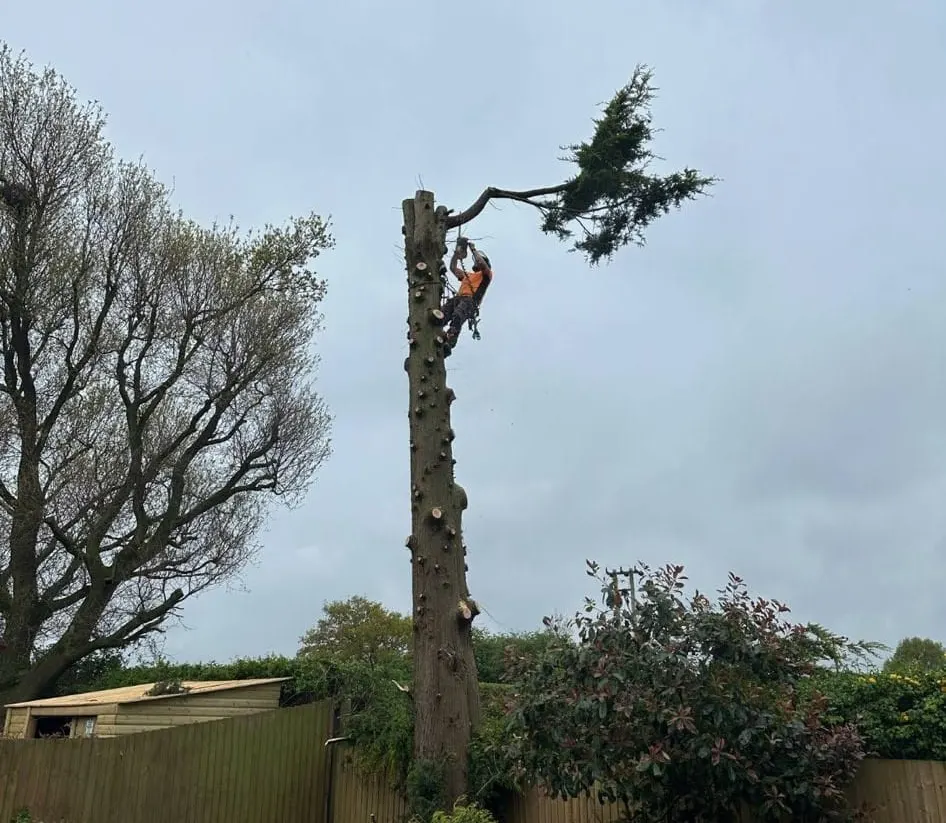
A Guide for Homeowners in Belper, Ripley & Alfreton
After a severe storm in Amber Valley, it’s essential for homeowners in Belper, Ripley, and Alfreton to inspect their trees for potential hazards. Strong winds and waterlogged soil can weaken trees, making them unsafe and posing a risk to people and property.
This guide from TB Tree Care explains how to identify the warning signs of dangerous trees and why professional inspection is vital for tree safety.
Identifying a Dangerous Tree
Common Warning Signs to Look For
When assessing your trees after a storm, look carefully for the following issues:
- Unusual leaf loss or discolouration – early indicators of stress or internal damage.
- Cracks or splits in the trunk or branches – often signs of serious structural weakness.
- Fungal growth or decay – evidence that the tree’s stability may already be compromised.
If you notice one or more of these symptoms, avoid standing directly beneath the tree and seek advice from a qualified tree surgeon in Amber Valley.
How Leaning Trees Pose Risks
A tree that begins leaning noticeably after a storm may have suffered root damage. This can make it unstable and more likely to fall — especially if it’s leaning towards a house, road, or power line.
Leaning trees in areas like Belper or Ripley should always be assessed by a professional tree surgeon. Attempting to stabilise or remove such trees without training can be extremely dangerous.
Recognising Signs of Decay
Decay is one of the most serious signs that a tree may be unsafe. Look out for:
- Fungus or mushrooms growing around the base or trunk
- Soft, hollow, or brittle bark
- Cavities or holes caused by rot or pests
Trees showing signs of decay can become hollow or lose their internal strength, making collapse far more likely. Tree surgeryor even tree removal may be required to prevent accidents.
The Importance of Tree Safety
Understanding Your Duty of Care
As a property owner, you have a legal duty of care to ensure that your trees do not pose a danger to neighbouring properties or the public. Regular inspections for disease, decay, or structural weakness are part of responsible tree ownership. If you suspect a tree may be unsafe, contact a qualified arborist for professional advice.
Impact on Property and Neighbours
An unsafe tree can cause extensive damage to fences, roofs, vehicles, or neighbouring structures if it falls. Falling branches also present serious injury risks — and homeowners could be held liable for damage caused by neglected trees.
For this reason, consulting a professional tree surgeon in Amber Valley is always the safest option.
Road and Footpath Hazards
Trees near roads or public paths that develop cracks or hanging branches can pose significant dangers. If you notice a public tree that looks unsafe, report it to Amber Valley Borough Council or Derbyshire County Council immediately to ensure public safety.
When to Consult a Professional Tree Surgeon
Choosing a Qualified Arboricultural Expert
If you suspect a tree is unsafe, contact a qualified arborist or tree surgeon. They have the skills and equipment to:
- Accurately assess tree stability
- Identify hidden decay or disease
- Recommend safe pruning, bracing, or removal methods
Professional inspection is the best way to avoid unnecessary risks.
Benefits of Professional Tree Preservation
Engaging professional tree surgeons early can often save a tree from complete removal. Skilled tree care services can:
- Remove diseased or dead branches
- Improve the tree’s structure and stability
- Restore its health while reducing future risks
By acting promptly, you may prevent the loss of valuable trees on your property.
Tree Preservation Orders (TPOs)
Some trees in Amber Valley, Belper, or Alfreton may be legally protected by a Tree Preservation Order (TPO) issued by the local planning authority. If a tree is protected, you’ll need written permission from the council before carrying out any work, including pruning or removal. Always check with your local authority before starting tree surgery.
Taking Action on Unsafe Trees
What to Do if You Identify a Dangerous Tree
If you suspect a tree on your property is unsafe:
- Keep people and pets away from the area.
- Do not attempt to cut or climb the tree yourself.
- Contact TB Tree Care or another professional arborist immediately for assessment and advice.
Prompt action helps prevent injury, property damage, and further decay.
Reporting Unsafe Public Trees
If you notice a damaged or unstable tree on public land, report it to the Amber Valley Borough Council or Derbyshire County Council. Provide details of the tree’s location and visible warning signs.
Maintaining Tree Health
Prevention is always better than cure. Keep your trees healthy by:
- Watering and feeding appropriately
- Pruning dead or diseased branches regularly
- Applying mulch around the base to retain moisture
- Checking for pests or fungal growth
Routine maintenance reduces the risk of storm damage and helps ensure long-term tree safety.
Frequently Asked Questions
What trees am I not allowed to cut down?
Trees protected by a Tree Preservation Order (TPO) or located within a conservation area require permission from the local planning authority before any work is carried out. Always check with Amber Valley BoroughCouncil before starting any tree surgery.
How do I know if a tree is dangerous?
Inspect the tree for cracks, splits, or leaning, particularly after strong winds. Look for fungal growth around the base or soft, hollow bark, which may indicate internal rot. If in doubt, contact a professional tree surgeon for an assessment.
How much do tree surgeons charge to remove a dangerous tree?
Costs vary depending on the size, species, and location of the tree, as well as the complexity of the job. Trees near buildings or power lines typically cost more to remove safely. For an accurate quote, it’s best to request a free inspection from a qualified local tree surgeon.
What can I do if my neighbour’s tree is causing problems?
Speak with your neighbour first. You can usually trim overhanging branches back to your property boundary, but it’s courteous (and often advisable) to inform them before doing so. If the tree’s roots or branches are causing damage to your property, you may be entitled to seek compensation.
Why should I employ a professional tree surgeon?
Qualified tree surgeons ensure all work is carried out safely and legally. They can identify hidden defects, work within TPO regulations, and prevent avoidable damage to trees, property, and people.
What trees are you not allowed to cut down?
How to know if a tree is dangerous? Carefully inspect for cracks/splits in the trunk/branches, signs of decay, and significant leans, especially after storms. After a storm, conduct a thorough inspection for any visible cracks or splits in the trunk or branches. Check for signs of decay, such as the presence of fungus around the base of the tree, or soft spots in the bark. A significant lean, especially after strong winds, can also indicate that the tree is dangerous and requires immediate attention.
How much do tree surgeons charge to remove a dangerous tree? The cost to remove a dangerous tree depends on size, species, location, complexity, and the surgeon’s rates. Get multiple quotes. The cost of removing a dangerous tree can vary widely depending on several factors. The size and species of the tree, its location, the complexity of the removal process, and the tree surgeon’s rates all influence the final price. Removing a large tree that is close to power lines or buildings will likely cost more due to the increased level of risk and the need for specialized equipment. It is advised to seek quotes from multiple professional tree surgeons to get an accurate estimate, especially if the property is dangerous.
What trees are you not allowed to cut down? Trees protected by a Tree Preservation Order (TPO) require permission from the local planning authority before any work is carried out. Certain trees are protected by law, meaning you may not be able to cut them down without permission from the local planning authority. A tree preservation order (TPO) is the main legal instrument used to protect trees. If a tree is covered by a tree preservation order, you must obtain consent from the borough council or county council before undertaking any tree surgery. Additionally, trees within conservation areas may also have certain protections in place, and it’s best to check with your local planning authority.
What can I do if my neighbour’s trees are causing me problems? Discuss the issue with your neighbour. You can usually trim overhanging branches back to your property line after notifying them. If your neighbour’s trees are causing a nuisance, the first step is to discuss the issue amicably with them. If the tree’s branches overhang onto your property, you generally have the right to trim them back to your boundary line, but only after notifying your neighbour. If the trees have fallen or the tree’s roots are causing damage to your property, you may be able to claim compensation from your neighbour.
Why do I need to employ a tree surgeon? Tree surgeons identify hazards, conduct safe tree surgery, and prevent damage. They ensure compliance with TPOs and regulations. Employing a tree surgeon is crucial for ensuring tree safety and maintaining the health of your trees. A qualified arborist has the expertise to identify potential hazards, such as decay, disease, or structural weaknesses. They can provide expert advice, conduct tree surgery safely, and help prevent damage to people or property. Furthermore, if your tree is protected by a tree preservation order or is in a conservation area, you will likely need a professional tree surgeon to carry out the work in compliance with regulations. Failure to do so can pose a risk.