Tree Preservation Orders are probably the most misunderstood aspect of residential tree management in England. Ask a group of homeowners whether their garden trees are protected and most will have no idea. Ask those who do know and you’ll find a significant proportion who overestimate what they can do without consent — or do not understand that protection can apply without a specific TPO through conservation area law. Getting this wrong can result in a criminal conviction and a fine of up to £20,000 per tree. This plain-English guide explains how Tree Preservation Orders work, how to find out if your tree is protected, what requires consent, and how the application process works.
What Is a Tree Preservation Order?
A Tree Preservation Order (TPO) is a legal instrument made by a local planning authority (your district or borough council, or in some cases a county council, national park authority, or the Forestry Commission) that places legal protection on a specific tree, group of trees, or area of woodland. Once a TPO is in place, it is a criminal offence to cut down, uproot, top, lop, willfully damage, or willfully destroy a protected tree without first obtaining written consent from the authority that made the order.
TPOs are made under Section 198 of the Town and Country Planning Act 1990, and the current procedural regulations (the Town and Country Planning (Tree Preservation)(England) Regulations 2012) set out the process for making, confirming, and applying for consent under a TPO. The legal framework is not optional guidance — it is enforceable criminal law.
What Can Councils Protect with a TPO?
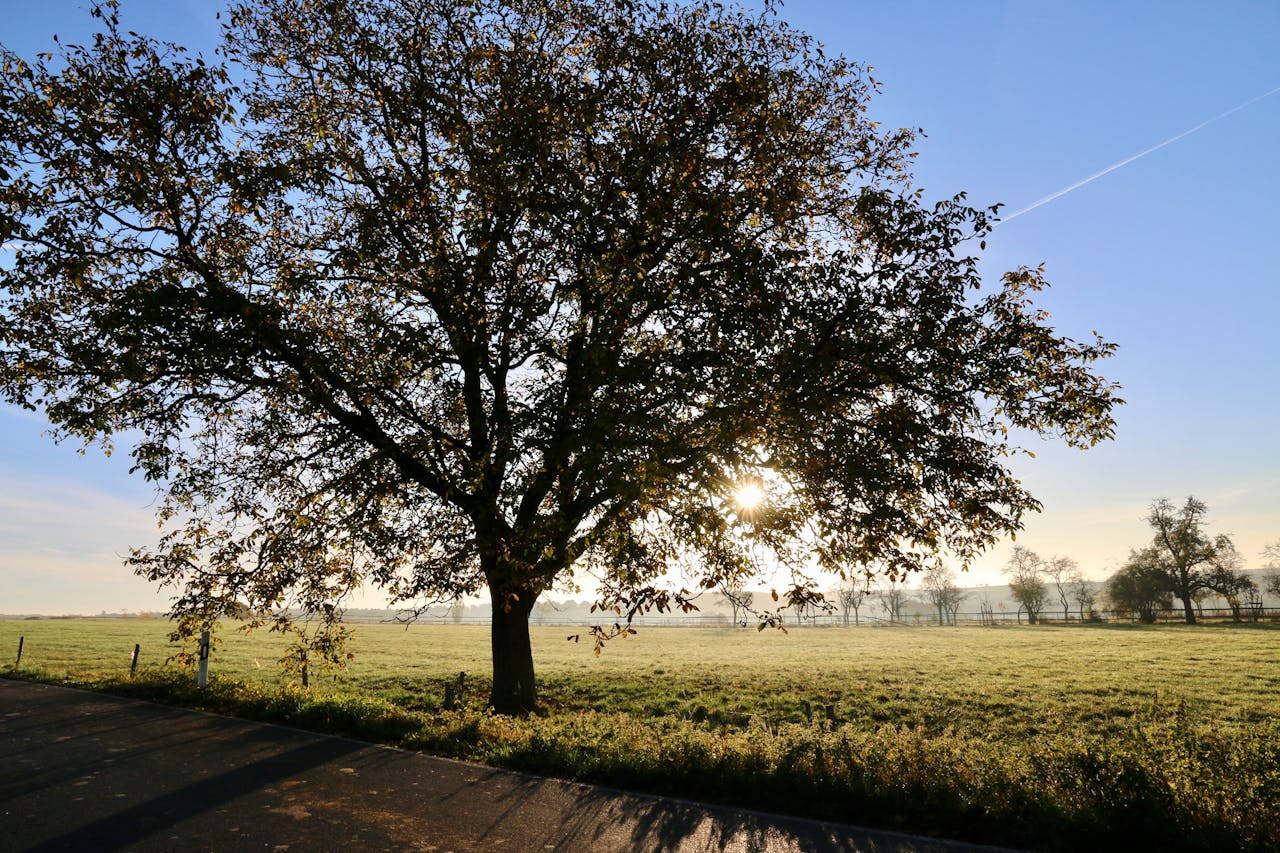
A local planning authority can make a TPO on any tree it considers to be expedient in the interests of amenity to protect. ‘Amenity’ has a broad meaning in this context: it covers visual amenity (what the tree contributes to the appearance of the area), ecological amenity (biodiversity value), historical or cultural significance, and contribution to the character of a conservation area or listed building setting.
The key constraint on councils is that a TPO must be justified — there must be a genuine amenity reason for the protection. TPOs are not made arbitrarily. In practice, the trees most commonly subject to TPOs are:
- Large, mature, visually prominent specimens in residential areas
- Street trees in open public view
- Trees contributing to the setting of listed buildings or conservation areas
- Trees in or adjacent to public open space or wildlife corridors
- Ancient or veteran specimens of exceptional ecological value
- Group plantings that contribute collectively to local character
How to Check if Your Tree Is Protected
There are four practical ways to find out:
1. Check the council’s online TPO map
Most local planning authorities in England now publish their TPO register as an online searchable map. In Nottinghamshire, the relevant authorities are:
- Broxtowe Borough Council — covers Beeston, Chilwell, Stapleford
- Gedling Borough Council — covers Carlton, Gedling, Arnold
- Newark and Sherwood District Council — covers Southwell, Newark, Ollerton
- Mansfield District Council — covers Mansfield, Warsop, Kirkby
- Nottingham City Council — within the city boundary
In Derbyshire, for the DE56 area: Amber Valley Borough Council covers Belper, Ripley, and Heanor.
2. Contact the council’s tree officer directly
Every local planning authority with planning powers has at least one arboricultural officer. You can contact them by phone or email and ask whether a specific tree is protected. They are generally helpful and responsive to genuine enquiries from property owners.
3. Check your property deeds or conveyancing records
If you bought your property in the last 20–30 years, your solicitor should have flagged any TPOs on the land as part of the standard local authority search. Check your conveyancing documents for a Land Charges search result.
4. Ask your arborist
We check the relevant local authority TPO register as part of every site visit and advise you on your legal position before any work is scoped or quoted. This costs you nothing and ensures you are never in the position of discovering a TPO after works have started.
Conservation Areas: A Separate and Often Overlooked Protection
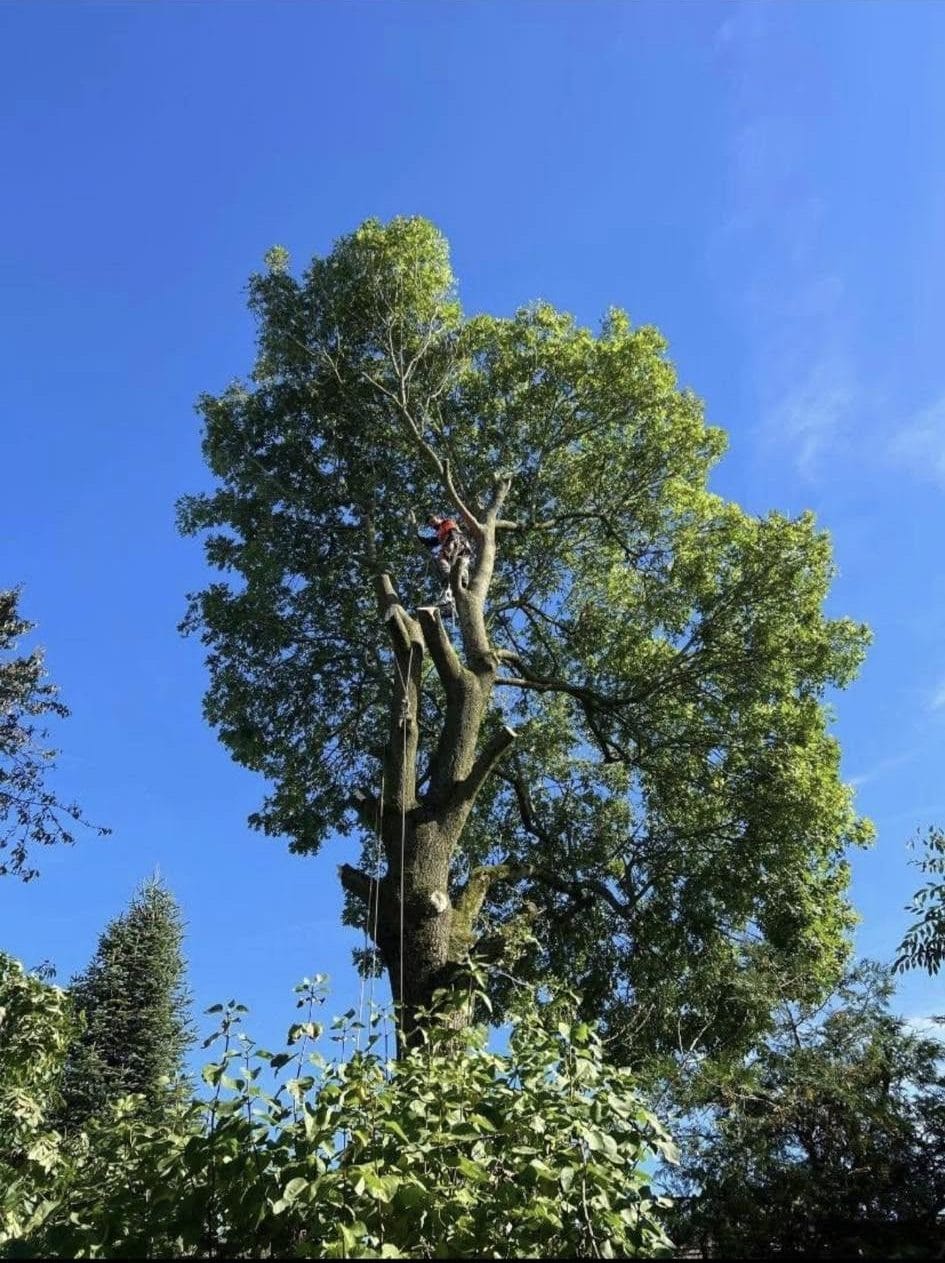
A tree does not need to be subject to an individual TPO to be legally protected. Within a designated conservation area, any tree with a stem diameter exceeding 75mm measured at 1.5 metres from the ground is subject to a Section 211 notification requirement under the Town and Country Planning Act 1990. This means that before carrying out any significant works — including felling, crown reduction, or any pruning beyond minor maintenance — you must give the relevant local planning authority six weeks’ prior written notice.
The purpose of this notice period is to give the council the opportunity to decide whether to make a TPO on the tree before works proceed. If the council does not make a TPO within six weeks, you may proceed with the intended work (subject to any other consents that may be required). If the council does make a TPO, you must then apply for consent in the normal way.
Failing to give a Section 211 notice is a criminal offence with the same penalties as breaching a TPO. Conservation areas in our coverage area include parts of central Beeston, Southwell (extensive — covering much of the town around the Minster), Belper town centre, Gedling village, and many other locations across Nottinghamshire and Derbyshire.
What Requires Consent Under a TPO?
If your tree is subject to a TPO, the following activities all require prior written consent from the council before proceeding:
- Felling or uprooting the tree
- Crown reduction — reducing the overall height and spread of the canopy
- Crown lifting — removing lower branches
- Crown thinning — removing internal branches
- Deadwood removal above a threshold diameter (typically consent is required for significant deadwood removal, though minor deadwood above 50mm over targets is covered by a blanket exemption in some cases)
- Cutting back overhanging branches — even where the branches overhang a neighbouring property, this requires consent if the tree has a TPO
- Any works that would remove a significant portion of the tree’s living crown
What Does Not Require Consent
- Works to dead branches above 50mm in diameter that present an immediate risk to people (but the council must be notified)
- Works immediately necessary to prevent or reduce an immediate risk to people or property (the ’emergency exemption’ — but this is narrowly interpreted and the council must be notified as soon as possible)
- Works required to maintain statutory obligations (e.g., utility companies clearing for safety)
- Works to fruit trees in private orchards carried out to improve production — with specific limitations
How to Apply for TPO Consent
A consent application to a local planning authority should include:
- The location and description of the tree — species, approximate size, precise location on a plan
- The proposed works — described clearly and specifically (not just ‘some pruning’)
- The reason for the works — what the works are intended to achieve or what problem they address
- Supporting photographs — showing the tree, its context, and any relevant condition issues
- A written arboricultural report — required by most councils where disease, structural risk, or complex management is cited as the reason for significant works
The local planning authority has eight weeks to determine the application from the date it receives a complete submission. The council may grant consent, grant consent with conditions (for example, requiring replacement planting), or refuse. A refusal can be appealed to the Planning Inspectorate.
The Penalties for Unauthorised Works
Carrying out works to a TPO-protected tree without consent is a criminal offence under Section 210 of the Town and Country Planning Act 1990. The penalties on summary conviction are up to £20,000 per tree. The Crown Court has no upper sentencing limit. Replanting conditions can also be imposed by way of enforcement, and the council may require the replacement of a removed tree with a specimen of comparable amenity value — which is not achievable with a small replacement tree and may never be achievable in the case of a very large veteran.
Courts have in recent years issued substantial fines in cases where developers or homeowners have deliberately removed protected trees to improve a view or clear a development site. The assumption that a fine is a cheaper route than compliance is not reliable.
How We Help with TPO Applications
We provide a complete TPO application service for homeowners and landowners across Nottinghamshire and Derbyshire. This includes:
- Checking the relevant council’s TPO register and conservation area boundaries
- Advising clearly on what consent is required before any works are scoped
- Preparing the written application, including species identification, a description of the proposed works, the arboricultural justification, and supporting photographs
- Preparing a formal arboricultural condition report where required by the council
- Submitting the application and tracking progress
- Advising on appeal options if consent is refused
For guidance on specific tree issues that commonly lead to TPO applications, see also: ash dieback and TPOs in Nottinghamshire, warning signs your tree is dangerous, and our location-specific guides for Beeston, Belper, and Southwell.
Frequently Asked Questions
Can a TPO be removed?
Yes, in theory. A landowner can apply to the council to revoke a TPO, and the council has the power to revoke it if it considers the amenity reason no longer applies. In practice this is rarely granted, and the process is slow. A more realistic approach is usually to apply for the specific works you need rather than challenging the TPO itself.
Do TPOs affect the value of my property?
A TPO does not directly reduce property value, and many buyers consider mature protected trees to be a positive feature. However, a TPO does restrict what you can do with a tree without consent, which affects your management options. If you are buying a property with TPO trees, understanding the implications before exchange is sensible.
I bought my property and didn’t know it had a TPO. Am I liable for works carried out by the previous owner?
The liability for past unauthorised works typically lies with the person who carried them out. However, a new owner may be required to carry out remedial works (such as replanting) required by a previous enforcement notice. Checking for enforcement notices as well as TPOs in your pre-purchase searches is advisable.
How long does a TPO application take?
Eight weeks is the statutory determination period from receipt of a complete application. Many straightforward applications are resolved more quickly. Applications involving significant trees near listed buildings or in conservation areas may take the full period. We manage the timeline and keep you informed throughout.
Need help with a TPO or conservation area application?
We handle the full application process for homeowners across Nottinghamshire and Derbyshire. NPTC qualified, fully insured. Free site visits and no-obligation advice on your legal position.

